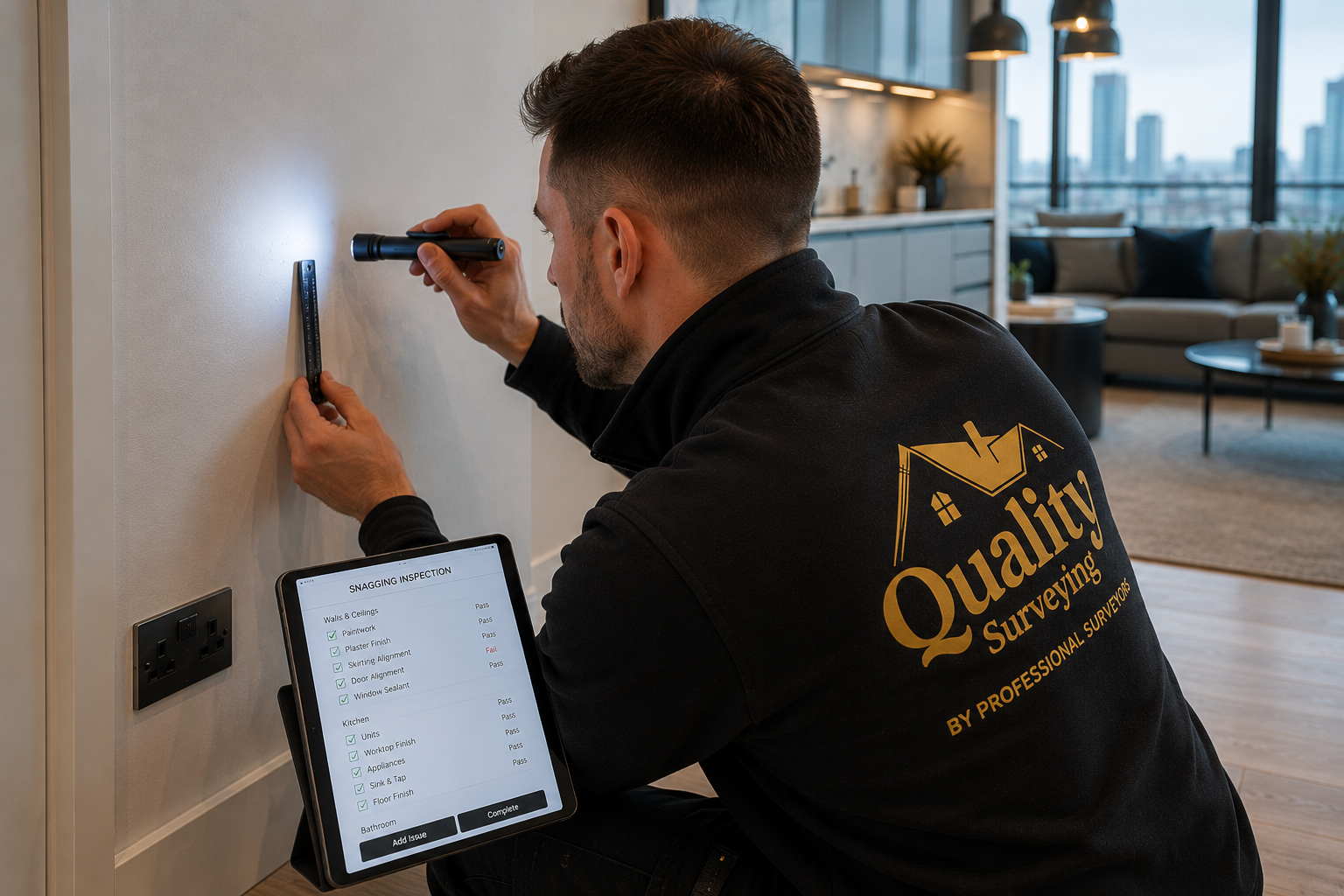
As one of the UK’s leading RICS-regulated snagging companies, we offer two levels of inspection to suit your needs. Our pre-completion inspection meets New Homes Quality Board requirements and provides an essential review before you take ownership of your home. For greater peace of mind, our post-completion inspection offers a far more in-depth assessment, supported by advanced technology and specialist equipment. If you’re looking for the most comprehensive evaluation of your property, our post-completion inspection is the ideal choice.
Our expert snagging company offers commercial snagging services.....
1.
Book a Date via Our Online Calendar
Many clients choose a “flexible date.” Because completion timelines can change, we provide the option to amend your booking date accordingly. We also work weekends to maximise availability.
2.
Cost-effective choices
Book now for just £35 and enjoy flexible payment options—spread the cost over three instalments or settle your final payment up to 48 hours before your inspection.
3.
What if my completion date is rescheduled?
If your completion date is rescheduled, you may rebook your snagging inspection at no additional cost.* Simply email or call us to arrange it. (*Terms and conditions may apply)
4.
Snagging Survey Day
Our qualified inspectors will carry out a thorough snagging survey of your new home to ensure you can enjoy complete peace of mind.
5.
Receive Your Report Within 2 Days
Your detailed snagging report will be emailed to you within 48 hours of your inspection. If you have any questions about your report, feel free to ask—we’re happy to help.
FQAs
What is Snagging?
Snagging” means carefully checking a newly built home for problems like defects, poor workmanship, or anything that doesn’t meet building standards. A snagging survey can find almost any issue in a new property.
A snagging inspector looks for things that are broken, damaged, or not finished properly during construction. They also check how well fittings and fixtures have been installed and whether the overall finish, including decorating work, is up to standard.
Common problems might include scratches on windows or kitchen worktops, uneven or badly painted walls, faulty extractor fans, uneven turf in the garden, stairs that are not built to the correct measurements, or poorly applied sealant.
In reality, there is no limit to what can be found, because any part of a property can have defects. In the UK, a new-build home often has over 120 issues identified during a snagging inspection, mainly because many homes are built quickly and in large numbers.
At what stage should snagging be done?
Defect inspection should be carried out once a building contractor has completed construction and interior finishing. Fault checking can take place either before or after completion, although ideally the quality assessment should be done prior to handover. This allows the developer sufficient time to rectify any issues before the property is occupied.
Providing a defect report to the builder before move-in also helps avoid disputes over whether damage was caused during construction or after occupation. However, homeowners typically have up to two years to report defects. Even so, most developers prefer inspections to be conducted as early as possible to minimise the expense of reattending sites, especially while their tradespeople are still on-site completing other projects.
What are the Most Common Snags?
Every property differs, and each development may have varying standards of finish, even across different phases. However, the following are some commonly encountered defects:
Poorly finished plasterwork, especially around pipes, media plates, light switches, and plug sockets
Inadequate or uneven grouting between tiles
Visible surface cracking or joint lines showing through ceilings and walls
Damage to window and door frames, particularly the undersides of French doors, which are often scraped during installation
Uneven stair treads
Scuffed or damaged skirting boards
Cabinets, especially wall-mounted units, marked with paint splatters
Inadequate insulation on water pipes and storage tanks
Mortar stains on brickwork
Uneven or poorly laid turf, often due to substandard ground preparation
How long should it take for snags to be fixed?
For critical defects—such as those that pose a risk to occupants or fail to comply with NHBC standards—rectification should be carried out immediately and as a matter of urgency. Any such matters ought to be resolved prior to occupation. For less severe defects, the timeframe for repair will depend on the nature of the issue.
Certain problems, such as damaged floor tiles or scratched window glass, may require a lead time while the developer sources replacements, which could take several weeks. Conversely, minor cosmetic imperfections may be addressed as soon as the following day.
Ultimately, the speed of resolution depends on the responsiveness of the developer. Some developers also employ dedicated aftercare staff outside of their construction teams to handle defect rectification.
Can snagging be done after completion?
Snagging inspections can still be carried out after a property has been completed. In fact, UK regulations allow new-build homeowners up to two years from the completion date to identify and report defects. However, it is generally advisable to arrange a snagging survey before moving in, in order to prevent potential disputes with the property developer. Once the home is occupied, it becomes more difficult to determine whether any issues were caused during construction or as a result of normal day-to-day use after moving in.
Who covers the cost of snagging?
A property developer is generally expected to cover the cost of repairing all defects in a newly built home. Because new builds are often completed quickly and in large numbers, a snagging inspection can typically uncover over 100 issues. If any of these defects are missed from the snagging report, the responsibility for fixing them may fall to the homeowner, as many developers only accept a single, finalised list of issues that cannot be amended after submission. However, significant defects are usually protected under new build warranty schemes.
What is the duration of the snagging period for a new build?
The defect liability period for a new build is typically two years. During this time, the developer is responsible for repairing any issues that are reported. Ideally, a snagging inspection should be carried out before the moving-in date to ensure that any faults identified are not mistaken for wear or damage caused once the property is occupied, rather than construction quality issues. In addition, most developers enforce strict procedures on how and when defects can be reported and rectified. Usually, only a single snag list is accepted, with no amendments after submission, which is why hiring a professional snagging company is often recommended.
Do Developers Accept Snagging Reports?
Yes.
Professional snagging reports provide documented evidence that can be submitted directly to your developer for rectification.