Table of Contents
- Identifying New Build Plumbing Issues: What to Look For
- Signs of Plumbing Leaks in a New Home
- Your New Build Plumbing Checklist: A Room-by-Room Guide
- Common Plumbing Problems in New Builds and How to Diagnose Them
- How to Report Defects to a Housebuilder
- When to Book a New Build Snagging Inspection
- Conclusion
- Frequently Asked Questions
Last Updated: 21 October 2026
Identifying New Build Plumbing Issues: What to Look For
Identifying new build plumbing issues means checking the water, waste and heating systems in a recently completed home for leaks, poor pressure, faulty fittings and installation shortcuts before they cause damage. At Quality Surveying Ltd, we inspect new homes for buyers who want proof that the plumbing meets the standard they paid for. This guide shows you what to check, how to test it, and when to call in a professional.
New builds fail in predictable places. The pipework is often rushed at the end of a project, and small faults hide behind sealed floors and painted ceilings.
Below, we break down the checks we would make ourselves, room by room, so you can spot problems early and report them properly.
Signs of Plumbing Leaks in a New Home
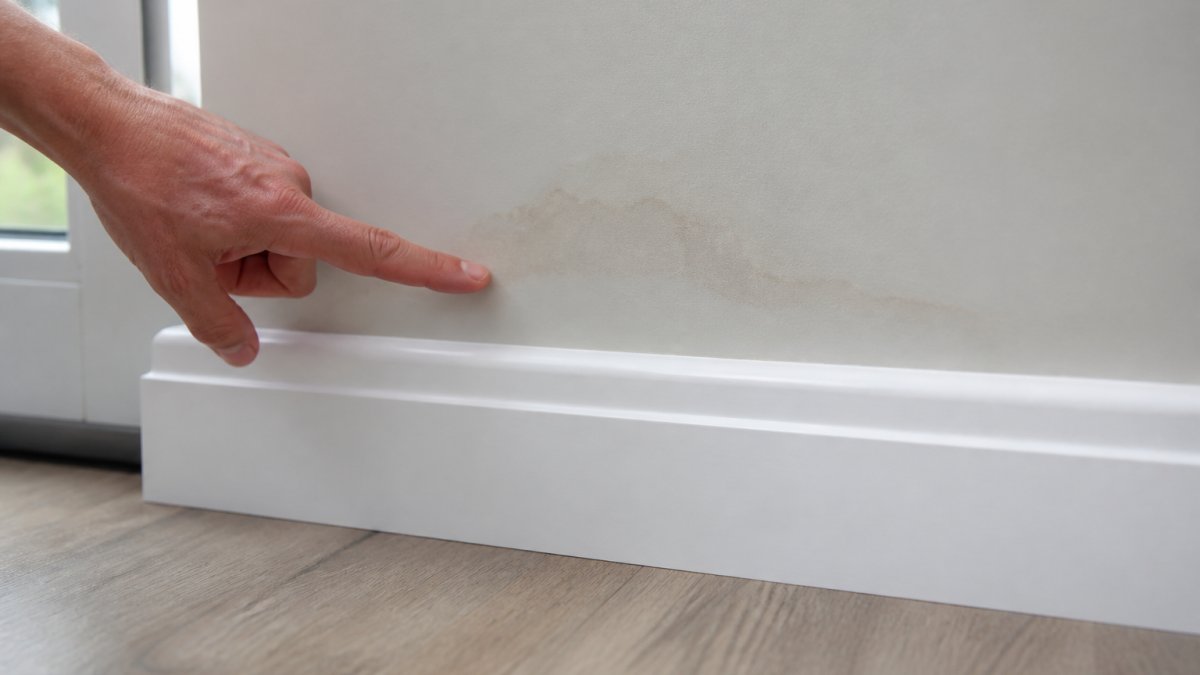
A plumbing leak in a new home shows up as damp patches, musty smells, rising water bills or discoloured plaster, often before any water is visible on the floor. Leaks in new builds usually start at joints, seals and where pipes pass through walls or floors.
Look for these warning signs:
- Brown or yellow rings on ceilings and walls, especially below bathrooms
- Damp or soft patches near skirting boards and behind units
- A musty smell in cupboards, under sinks or in hallways
- Water stains around pipe entries and radiator valves
- Unexplained rises in your water meter reading
- Lifting or bubbling paint near wet areas
Check your water meter last thing at night with every tap off. If the dial moves, water is escaping somewhere. That single test catches more hidden leaks than any visual sweep.
Do not paint over or seal a damp patch to “tidy it up” before reporting it. You remove the evidence a builder needs, and the fault gets blamed on you later.
Your New Build Plumbing Checklist: A Room-by-Room Guide
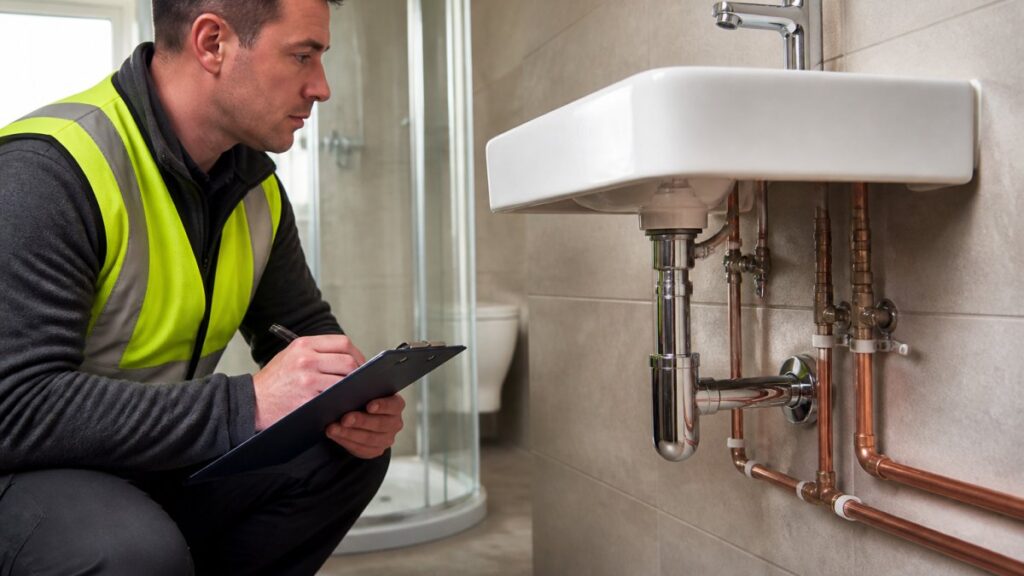
A new build plumbing checklist should cover every room with running water, plus the loft, airing cupboard and any outside taps. Walk the house with a notebook and record what you find, room by room.
Work through this list:
- Kitchen: run the tap and check under the sink for drips; test the dishwasher and washing machine connections; look for water pooling at the base of units
- Bathrooms: flush every toilet twice; check the seal at the base of each pan; run showers and baths and watch waste pipes; check sealant lines for gaps
- En-suite and cloakroom: repeat the bathroom checks; these smaller rooms are often finished fastest and checked least
- Utility and airing cupboard: inspect the boiler, cylinder and any visible pipe joints for crusting or damp
- Loft: check under the cold water tank and around pipe runs for staining
- Outside: test outside taps and check the drain connections
Run every tap, shower and appliance at the same time. Poor pressure often only shows when the system is under load.
Photograph every joint and fitting before you move furniture in. If a fault appears months later, dated photos prove the defect was there from the start.
Common Plumbing Problems in New Builds and How to Diagnose Them
The most common plumbing problems in new builds are leaking joints, poor water pressure, blocked wastes, faulty valves and incorrectly fitted appliances. Most trace back to rushed installation or fittings that were never tested under load.
Here is how to diagnose each one:
- Dripping joints: dry the joint, wrap it in tissue and check again after an hour. A damp tissue means a leak.
- Low pressure: run a cold tap and a shower together. A big drop points to undersized pipework or a supply issue.
- Slow drains: fill a basin, release it and watch how fast it clears. Gurgling or slow clearing suggests a partial blockage or poor fall on the pipe.
- Noisy pipes: banging or humming when taps close usually means loose pipe clips or a failing valve.
- Cold radiators: feel across the radiator. Cold at the top means trapped air; cold at the bottom means sludge or a balancing fault.
If a fault appears in more than one room, suspect the system, not the fitting. Shared symptoms point to a design or installation problem, which is a stronger claim against the builder.
How to Report Defects to a Housebuilder
Reporting defects to a housebuilder works best in writing, with photos, dates and a clear description of each fault, sent through the official after-sales channel. Verbal reports get forgotten. Written reports create a record.
Follow these steps:
- Log every defect with a photo, the date and the room
- Send the list by email to the customer care team and keep a copy
- Ask for a written response with a repair date
- Allow reasonable access for inspection, but confirm it in writing
- Chase any missed appointments in writing
- Keep a diary of every visit and every conversation
Most builders work to a defined defects period after completion, and many are signed up to a new homes ombudsman scheme. Check your contract and warranty documents for the exact process and timescales that apply to your home.
If the builder disputes your findings, an independent report carries far more weight than a homeowner’s list. That is where a professional inspection earns its keep.
When to Book a New Build Snagging Inspection
Book a new build snagging inspection before you complete, or as soon as you move in, while the builder is still responsible for putting things right. A snagging inspection is an independent survey that records defects in a new home so the buyer can ask the builder to fix them.
Timing matters more than most buyers realise:
- Before completion: catches problems while the builder still has trades on site
- At handover: gives you a dated record from day one
- Within the defects period: keeps your claim within the builder’s liability window
A professional inspection uses tools the untrained eye cannot match. At Quality Surveying Ltd, our RICS and RPSA-accredited surveyors use thermal imaging cameras to find hidden leaks and damp that visual checks miss. We work solely for homeowners, never for developers, and our digital reports are issued within 48 hours. Every inspection is aligned with NHQB requirements, so the findings stand up when you raise them with the builder.
The best time to book is before completion. Faults found then get fixed by the builder’s own trades, at no cost to you.
Conclusion
Plumbing faults in a new home are common, and most are easier to fix the earlier you find them. Walk the house with a checklist, test under load, log everything in writing, and act inside the defects period.
If you want certainty rather than guesswork, Quality Surveying Ltd provides independent, RICS-regulated snagging inspections with thermal imaging, plain-English reporting and a 48-hour turnaround. Get a quote from Quality Surveying Ltd and protect the home you paid for.
Frequently Asked Questions
What plumbing problems should I look for in a new build?
Check for low water pressure at taps and showers, slow drains, visible leaks under sinks, and running toilets. Also look for damp patches on walls or ceilings, especially near bathrooms and kitchens. Test all appliances that use water, such as the washing machine and dishwasher. Listen for gurgling sounds after flushing. These are common signs that the new build plumbing may have installation faults or blockages.
How can I check for leaks in a new home?
Start by checking under sinks and around the base of toilets for water stains or moisture. Look for discoloured patches on ceilings below bathrooms. Take water meter readings when no water is being used; if the dial moves, there may be a hidden leak. Also inspect external walls and pipework for dampness. If you suspect a leak but cannot see it, a professional snagging inspection with thermal imaging can help.
What should I do if I find a plumbing defect after moving in?
Document the defect with clear photographs and a written description, noting the date and location. Report it to your housebuilder’s customer care team in writing, keeping a copy for your records. Most builders have a formal defects process and will arrange an inspection. If the issue is urgent, such as a major leak, turn off the water supply and call the builder’s emergency line. For persistent problems, consider an independent snagging inspection to support your case.
Should I get a professional inspection for new build plumbing issues?
A professional new build snagging inspection is worthwhile if you are unsure about the condition of your plumbing or want a thorough assessment before your warranty period ends. Accredited inspectors use tools like thermal imaging cameras to detect hidden leaks and poor installation. They provide a detailed report you can send to your builder. This is especially useful for first-time buyers who may not know what to look for.