Last Updated: October 23, 2026
Quick Summary
To hire a professional snagging surveyor in Liverpool, shortlist providers, verify RICS or RPSA accreditation with the relevant body, and request a sample report before booking. Book your inspection after legal completion but before you move furniture in, while the property is empty and every defect is visible.
- Verify RICS or RPSA membership numbers directly with the body, not just the surveyor’s marketing.
- Ask what is inspected, which equipment is used, and whether the report includes photographs.
- A proper report lists each defect with a photograph, location, description and recommended fix.
- Avoid choosing on price alone, as a cheap inspection that misses hidden defects costs more later.
- Book a second inspection before the developer’s warranty period ends to catch defects that emerge over time.
Table of Contents
- Why Hire a Professional Snagging Surveyor in Liverpool
- Snagging Surveyor Qualifications to Check Before Booking
- When to Book a Snagging Survey
- Step-by-Step: How to Hire the Right Surveyor
- What a Snagging Survey Report Example Should Include
- Snagging Survey Cost: What Affects the Price
- Common Mistakes to Avoid When Hiring a Snagging Surveyor
- Conclusion
- Frequently Asked Questions
Why Hire a Professional Snagging Surveyor in Liverpool
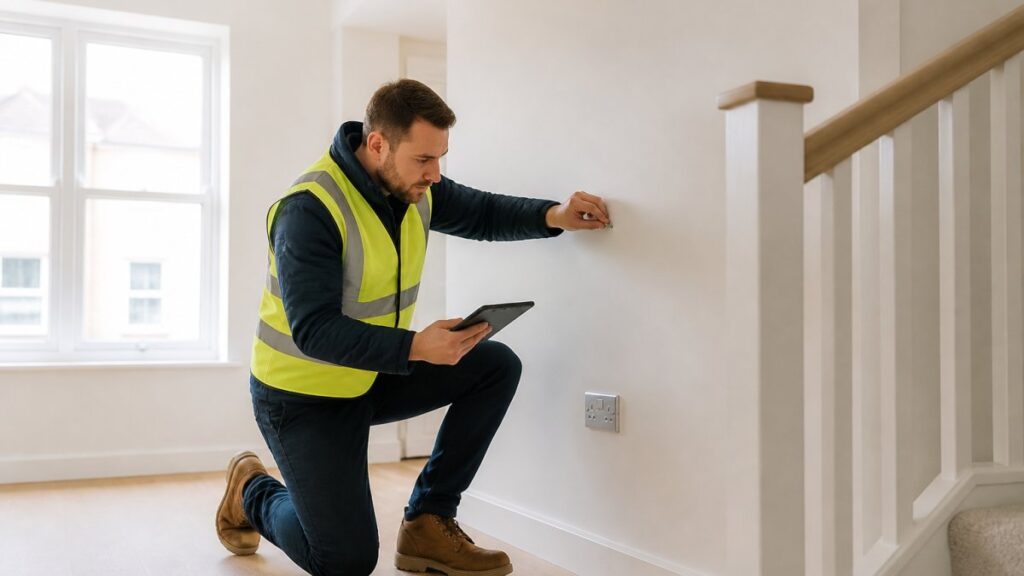
Buying a new-build home is the biggest purchase most people ever make, yet the property rarely arrives perfect. A snagging surveyor is an independent professional who inspects a newly built home for defects, from crooked skirting boards to hidden damp, and compiles a report you can hand to the developer. At Quality Surveying Ltd, we work solely for homeowners, never developers, which means our findings serve your interests alone.
The case for hiring one is straightforward. Developers’ own inspections are not independent, and minor defects are easy to miss without trained eyes and proper equipment. A professional snagging surveyor in Liverpool checks finishes, fixtures, drainage, and structure, then documents everything in a format builders recognise. Below, we explain exactly how to hire the right surveyor, what qualifications to check, and what a fair report should contain.
Independence is the whole point. A surveyor paid by the developer cannot give you an unbiased view of the developer’s work.
Snagging Surveyor Qualifications to Check Before Booking
The first thing to verify is accreditation. A credible snagging surveyor holds certification from a recognised body, carries proper insurance, and can show you a sample report before you commit. Ask for proof rather than taking a website badge at face value.
What RICS and RPSA Accreditation Means for Your Report
RICS is the Royal Institution of Chartered Surveyors, the professional body that regulates surveyors across the UK. RPSA is the Residential Property Surveyors Association, a specialist body for residential inspection work. Accreditation with either signals that the surveyor meets published standards, follows a code of conduct, and carries professional indemnity insurance.
Why does this matter in practice? Because a report from an accredited professional carries weight when you challenge a developer. It also gives you a route to redress if something goes wrong. Check the accreditation directly with the body, not just the surveyor’s own marketing.
When to Book a Snagging Survey
Timing determines how much you can get fixed. The best moment to book a snagging survey is after legal completion but before you move furniture in, while the property is empty and every defect is visible. Many buyers also arrange a second inspection shortly before the developer’s warranty period ends, since defects often surface once a home has been lived in through a full season.
Here is a simple rule of thumb:
- Before completion: a pre-completion inspection catches issues while the developer still has incentive to fix them quickly.
- Day of handover: ideal for a full snagging list, with the home empty and accessible.
- Before warranty expiry: a follow-up check picks up defects that appeared after settling and seasonal weather.
Book your inspection for a dry day if you can. Rain masks external defects like poor drainage falls and sealant gaps, and it makes roof and gutter checks harder to complete properly.
Step-by-Step: How to Hire the Right Surveyor
Hiring well comes down to a short, disciplined process. Follow these steps in order and you will avoid most of the traps.
- Shortlist three providers. Search locally, check reviews, and confirm each one serves your area.
- Verify accreditation. Ask for RICS or RPSA membership numbers and check them with the relevant body.
- Request a sample report. A good surveyor will share one without hesitation.
- Confirm the scope. Ask what is inspected, what equipment is used, and whether the report includes photographs.
- Check turnaround times. You want the report back quickly, ideally within a couple of days.
- Get the quote in writing. Confirm what is included and whether VAT applies.
- Book and prepare. Clear access, gather your developer contact, and note any concerns you want checked.
Questions to Ask Before You Book
- Are you accredited by RICS or RPSA, and can I verify it?
- Do you work for homeowners only, or also for developers?
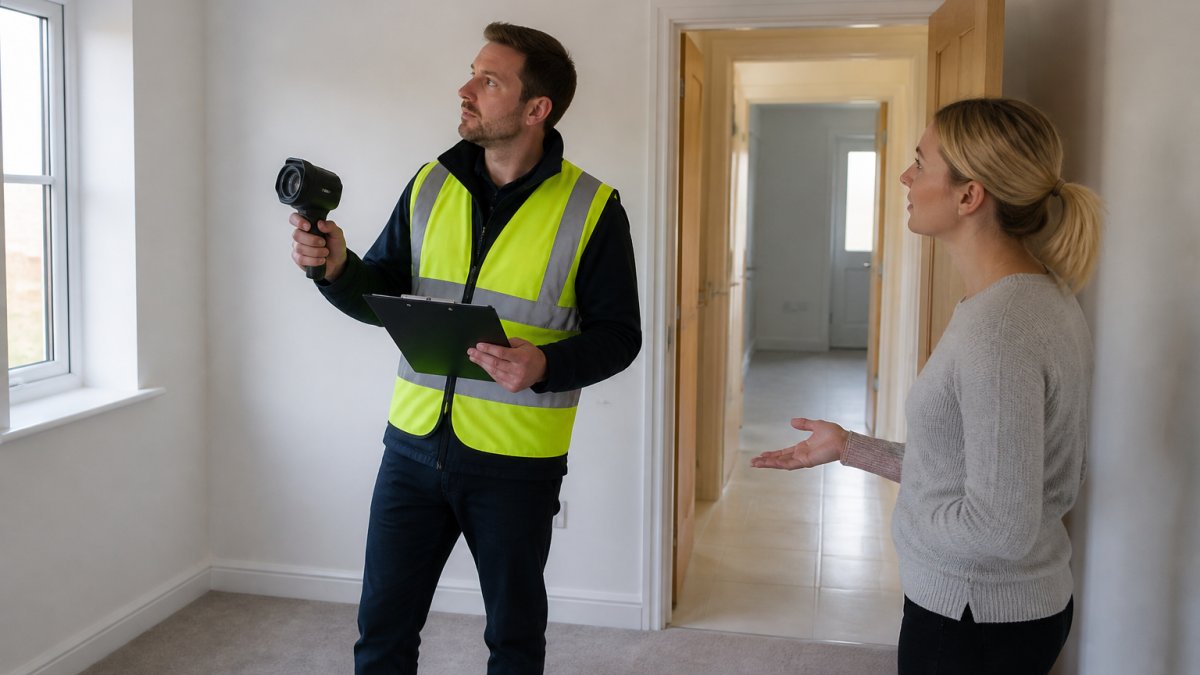
- Which equipment do you use, such as thermal imaging or moisture meters?
- How soon will I receive the report, and in what format?
- Will you explain the findings in plain English?
- What happens if the developer disputes your findings?
What a Snagging Survey Report Example Should Include
A proper snagging survey report example shows a clear, itemised list of defects, each with a photograph, a location, a description, and a recommended fix. It should be organised by room or area, use plain language, and separate cosmetic issues from structural or mechanical ones so the developer knows what to prioritise.
Look for these elements before you book:
| Report Element | What to Check | Why It Matters |
|---|---|---|
| Photo evidence | Clear images of each defect | Prevents disputes with the developer |
| Location detail | Room, elevation, or plot reference | Makes fixes easy to locate |
| Severity rating | Cosmetic vs structural | Helps prioritise repairs |
| Plain-English notes | No unexplained jargon | You can act on it yourself |
| Digital format | PDF or online portal | Easy to forward to the developer |
At Quality Surveying Ltd, we issue a digital inspection report within 48 hours, aligned with NHQB requirements, using professional equipment such as thermal imaging cameras to catch defects the untrained eye would miss.
Snagging Survey Cost: What Affects the Price
Pricing for a snagging survey varies with the property, not a fixed rate. Several factors move the snagging survey cost up or down:
- Property size. Larger homes take longer to inspect and generate longer reports.
- Property type. Flats, houses, and properties with complex services differ in scope.
- Level of inspection. A basic visual check costs less than one using thermal imaging and moisture testing.
- Turnaround. Faster reports sometimes carry a premium.
- Location and travel. Remote or hard-to-access sites can add cost.
We do not publish fixed prices because every home is different. Request a quote and we will give you a clear, itemised figure based on your property, with no hidden extras.
Common Mistakes to Avoid When Hiring a Snagging Surveyor
The biggest mistake is choosing on price alone. A cheap inspection that misses hidden defects costs far more in the long run than a thorough one. Watch for these traps:
- Skipping the accreditation check. Anyone can claim to be a surveyor. Verify it.
- Booking too late. Once you have moved in and unpacked, defects are harder to document and easier for the developer to dispute.
- Accepting a verbal summary. Insist on a written, photographic report you can forward.
- Using a surveyor tied to the developer. Independence is non-negotiable.
- Ignoring the follow-up. A second inspection before warranty expiry catches defects that emerge over time.
If a developer tells you their own inspection found nothing wrong, that is not an independent check. Commission your own report and hand the findings over in writing. Verbal reassurances rarely survive contact with a busy site team.
Conclusion
Getting a new-build home to the standard you paid for takes diligence, and the right surveyor makes that far easier. Quality Surveying Ltd works solely for homeowners, with RICS and RPSA accreditation, thermal imaging equipment, NHQB-aligned reports, and a digital report delivered within 48 hours. If you are buying or have just moved into a new build, get a quote and protect your investment before the defects become your problem.
Frequently Asked Questions
How do I choose a professional snagging surveyor?
Check for RICS or RPSA accreditation first, as these confirm the surveyor meets recognised industry standards. Ask whether they work solely for homeowners rather than developers, so their findings stay independent. Request a sample report to see how clearly defects are explained, and confirm they incentive professional equipment such as thermal imaging cameras. Finally, check their report turnaround time and whether they align with NHQB requirements, so your findings carry weight with the builder.
How much does a snagging survey cost?
Snagging survey cost varies depending on the property size, location, and the provider’s level of accreditation and equipment. Rather than quoting a fixed figure, most reputable surveyors price per property after confirming the number of bedrooms and any specific concerns. Request a written quote before booking and check exactly what the inspection and report include, so you can compare providers fairly and avoid paying extra for features you assumed were standard.
When should I book a snagging survey?
Book a snagging survey as soon as the property reaches practical completion, before you move furniture in, so defects are easy to spot and access is unrestricted. Many homeowners arrange the inspection within the first few days of getting the keys, while the developer’s rectification period is still active. Booking early also gives the builder more time to fix issues before your warranty obligations shift, and it avoids disputes over whether damage happened before or after you moved in.
What should a snagging report include?
A good report lists every defect found, grouped by room and severity, with clear photographs and plain-English explanations rather than technical jargon alone. It should cover cosmetic, mechanical, structural, and finishing issues, plus anything picked up by thermal imaging that isn’t visible to the eye. The report should be issued digitally, ideally within 48 hours, and formatted so you can forward it directly to the developer as evidence for rectification.
