

Table of Contents
- How Long Does a Snagging Inspection Take?
- What Happens During a Snagging Inspection
- Factors That Influence How Long a Snagging Inspection Takes
- The Snagging Inspection Checklist: What Gets Assessed
- Snagging Report Turnaround Time: From Inspection to Inbox
- When to Book a Snagging Inspection
- Tips for a Faster Snagging Inspection Process
- Conclusion
- Frequently Asked Questions
Last Updated: 18 October 2026
How Long Does a Snagging Inspection Take?
A snagging inspection usually takes between two and four hours for a typical new-build home. The exact time depends on property size, how many defects are found, and how much furniture is already in the way.
At Quality Surveying Ltd, we know this is the question most buyers ask first. You have a moving date, a developer waiting on completion, and you need to know how long a snagging inspection takes before you commit. The short answer: most inspections finish in a single morning or afternoon, and you get a digital inspection report within 48 hours of the visit.
Below, we break down the timings by property type, explain what slows an inspection down, and show you how to keep the whole process moving.
Typical Timeframes by Property Type
A one-bedroom flat sits at the fast end. Expect roughly one and a half to two hours. A three-bedroom house with a garden and garage usually runs two to three hours. Larger detached homes, or properties with extensive landscaping and outbuildings, can push past four hours.
| Property type | Typical inspection time | Notes |
|---|---|---|
| One-bedroom flat | 1.5 to 2 hours | Fewer rooms, less external area |
| Two-bedroom house | 2 to 2.5 hours | Garden and driveway add time |
| Three-bedroom house | 2 to 3 hours | Most common new-build size |
| Four-bedroom detached | 3 to 4 hours | More rooms, larger plot |
| Large detached with outbuildings | 4+ hours | Extra structures and services |
These are working estimates, not promises. A property with dozens of small defects takes longer to record properly than a clean one. That is time well spent, because every defect needs a clear location and description for the developer to act on.
What Happens During a Snagging Inspection
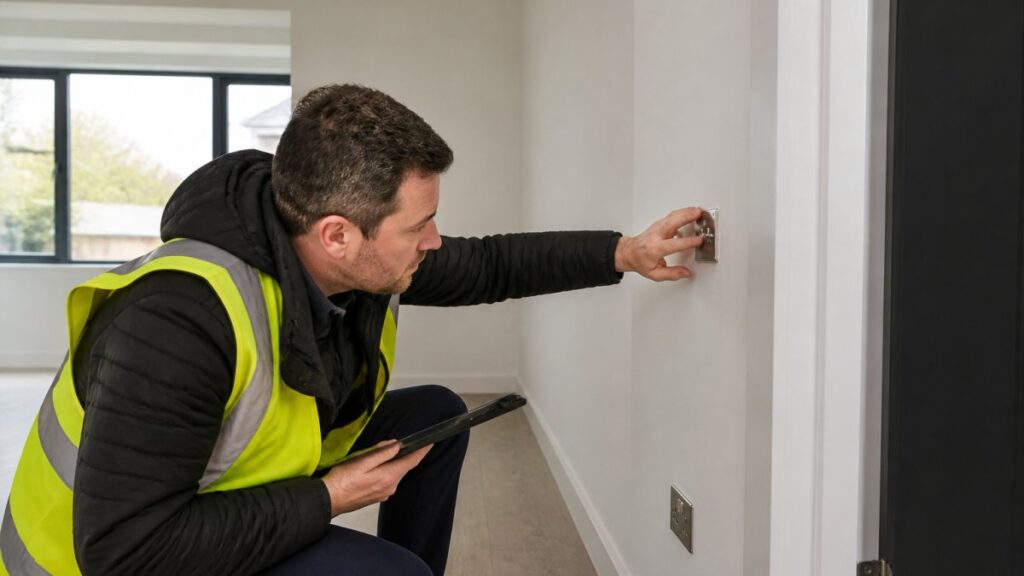
A snagging inspection is a room-by-room survey of a new-build property that records defects, incomplete work, and poor finishes in a written report. The surveyor tests and documents each item so the developer has a clear list to fix.
Here is what a typical visit covers:
- Exterior: brickwork, render, pointing, roof, guttering, drainage, paths and fences
- Internal rooms: walls, ceilings, skirting, doors, windows, sockets and switches
- Kitchen and bathrooms: units, worktops, seals, taps, drainage and tiling
- Services: heating, hot water, ventilation and any visible plumbing or wiring issues
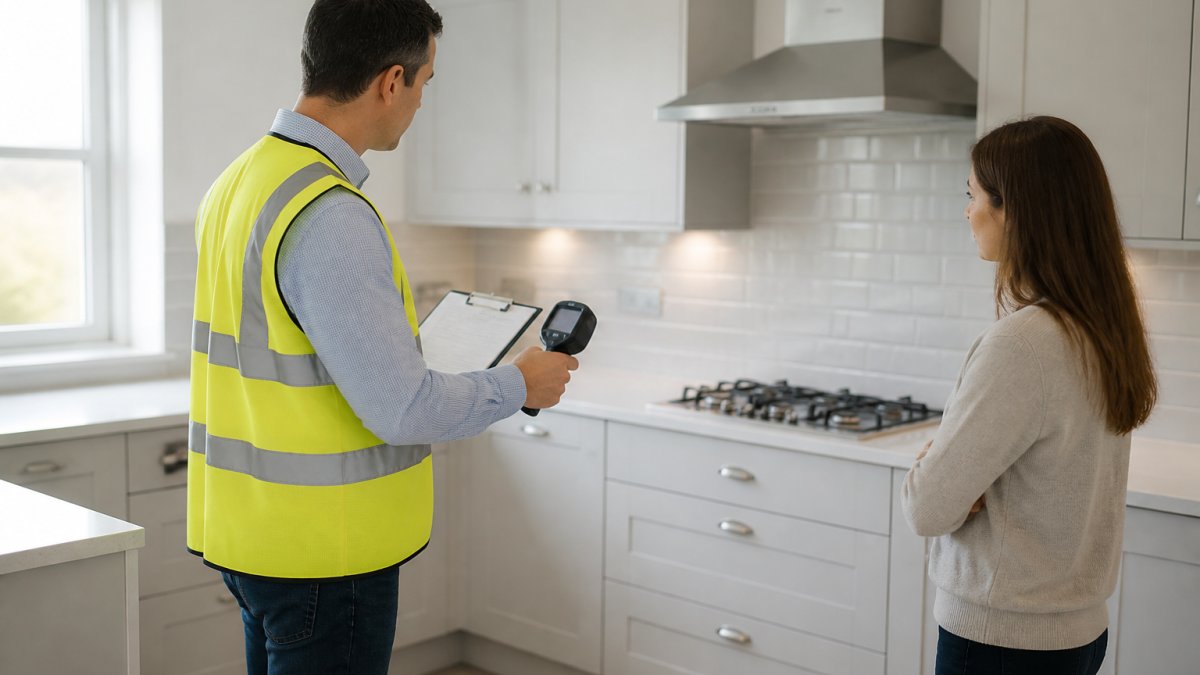
- Non-visible checks: thermal imaging to spot cold spots, damp and missing insulation
We use professional equipment, including thermal imaging cameras, to find problems the untrained eye misses.
Factors That Influence How Long a Snagging Inspection Takes
No two properties take the same time. The factors below are the ones that move the clock most.
Property Size and Complexity
Square footage is the obvious driver, but layout matters just as much. A compact house with awkward access to the loft, a cellar, or a complex roof takes longer than a larger, simpler home. Multiple bathrooms, utility rooms, garages and outbuildings all add inspection time.
Access, Occupancy and Site Conditions
This is where most delays creep in. A vacant property with clear access is the fastest to inspect. Once furniture is in, surveyors spend time moving items and checking behind them. Key issues include:
- Furniture blocking walls, floors and sockets
- Locked rooms or missing keys
- Poor light, especially on winter afternoons
- Scaffolding, building work or trades still on site
- No parking or restricted site access
Book your inspection before your furniture arrives if you can. A vacant property is quicker to inspect and easier for the developer to fix, because nothing is in the way.
The Snagging Inspection Checklist: What Gets Assessed
A snagging inspection checklist is the structured list a surveyor works through, room by room, to make sure nothing is missed. It covers four broad categories:
- Cosmetic: paint marks, scuffs, uneven finishes, damaged tiles
- Mechanical: doors that stick, windows that don’t close, faulty hinges
- Structural: cracks, uneven floors, gaps in brickwork or render
- Finishing: poorly sealed bathrooms, uneven skirting, gaps around fittings
The checklist keeps the inspection consistent and the report clear. It also means the developer gets a list they can work through item by item, rather than a vague summary.
A common mistake is to rely on the developer’s own walk-round as proof the property is fine. Their inspection serves their interests. An independent report gives you evidence you can hold them to.
Snagging Report Turnaround Time: From Inspection to Inbox
Snagging report turnaround time is the gap between the visit and the finished report landing in your inbox. Quality Surveying Ltd issues a digital report within 48 hours of the inspection.
That report matters because it is what you send to the developer. A clear, well-structured document with photos and locations makes it hard for anyone to argue. Slow reports delay the whole rectification process, so ask any provider how quickly they deliver before you book.
When to Book a Snagging Inspection
The best time to book a snagging inspection is once the property is finished but before you complete, or as soon as possible after you get the keys. Booking early secures your slot and gives the developer time to fix issues before you move in.
If you have already moved in, don’t worry. You can still book an inspection and raise a claim, though it helps to act quickly while the defects are fresh and clearly the developer’s responsibility.
Tips for a Faster Snagging Inspection Process
A little preparation saves real time on the day. Here is how to approach it:
- Book before furniture arrives, while the property is empty
- Make sure all keys and access codes are available
- Clear the driveway and confirm parking
- Arrange the visit for daylight hours
- Have your developer contact details ready
- Note anything you have already spotted, so the surveyor can check it
The fastest inspections happen on empty, well-lit properties with clear access. Preparation on your side can shave time off the visit and speed up the report.
Conclusion
Timing is the worry that stops many buyers from booking at all. In practice, a snagging inspection fits neatly into a single visit, and a good provider turns the report around fast. The bigger risk is skipping it and inheriting defects you then have to chase.
Quality Surveying Ltd works solely for homeowners, not developers. Our inspections are carried out by accredited RICS or RPSA professionals, fully aligned with NHQB requirements, and we deliver a digital report within 48 hours. Get a quote from Quality Surveying Ltd and protect the home you have paid for.
Frequently Asked Questions
Do I need to be present during a snagging inspection?
You do not need to be present, and many homeowners choose not to be. An independent snagging inspection works best when the surveyor has unrestricted access to move through the property and test fittings, windows and services without interruption. If you do attend, expect to follow the surveyor rather than assist. Most firms issue a detailed digital report afterwards, so you still see every defect identified. If you cannot attend, arrange for keys or site access in advance so the inspection is not delayed.
How soon will I receive my snagging report?
Snagging report turnaround time varies by provider. Quality Surveying Ltd issues its digital inspection report within 48 hours of the visit. The report lists each defect with photographs and location notes so you can forward it to the developer straight away. Ask any provider to confirm their turnaround in writing before booking, and check whether the report is formatted in a way your developer will accept as the basis for a rectification schedule.
When should I book a snagging inspection?
Book a snagging inspection after the developer has finished all works but before you complete or move in, ideally around two weeks before legal completion. At this stage the property is accessible, services are connected and defects are still easy to put right. If you have already moved in, book as soon as possible, because most developers set time limits for reporting snags under their warranty. A second inspection shortly before your warranty period ends is also worth considering for anything that has since appeared.
How long does it take a developer to fix snags?
There is no fixed legal timescale, but most developers aim to resolve snags within 28 days of receiving a report, with cosmetic items often grouped into a single return visit. Complex defects involving drainage, heating or structural elements can take longer. Keep a dated record of when you submitted the report and chase in writing if nothing happens. If the developer disputes a finding, an independent report from an accredited surveyor carries more weight than a homeowner’s own list.