

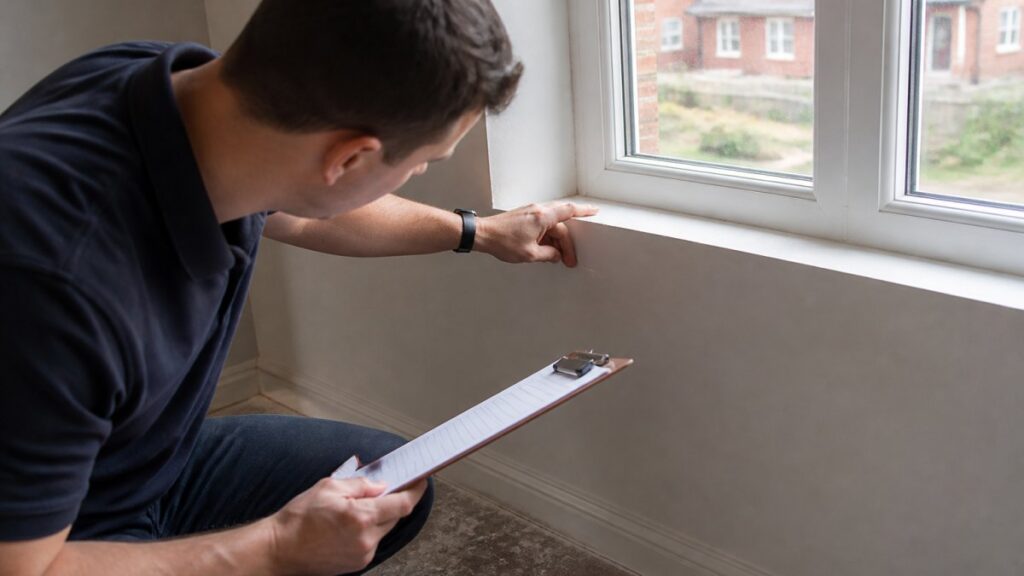
Last Updated: 26 October 2026
Quick Summary
You challenge a snagging report by disputing it in writing, with dated evidence, and by tying each item to the standard your home was sold against. The New Homes Quality Board Code of Practice sets out how developers should handle defects and complaints, and it is the framework that gives your challenge weight.
- Mark omitted defects, wrongly dismissed items, vague entries and repeat snags when reviewing the report.
- Strong evidence is dated, located and specific, using photographs with scale and a written log.
- Your dispute letter should state the facts, set a 14-day deadline and create a paper trail.
- Ask the builder to justify any rejection in writing before escalating internally.
- Escalate to the warranty provider and then the New Homes Ombudsman Service where registered.
Table of Contents
- Why a Builder Snagging Report Needs Challenging
- Step 1: Review the Report and Identify Defects to Dispute
- Step 2: Gather Snagging Report Evidence That Holds Weight
- Step 3: Write a Snagging Dispute Letter Template That Gets Results
- What to Do When a Builder Rejected Your Snagging Report
- How Long to Fix Snags After Completion and When to Escalate
- Book an Independent Snagging Inspection Before You Challenge
- Frequently Asked Questions
Why a Builder Snagging Report Needs Challenging
A builder snagging report is a formal list of defects found in a new-build home, and it needs challenging when it is incomplete, inaccurate or simply missing items you have already flagged. The developer’s own inspection is not the same as an independent one.
Most builders want to close a site down quickly. Their snag list reflects what they can fix cheaply, not what they actually owe you.
The question is how to challenge a builder snagging report without turning a straightforward defect list into a months-long argument.
Here is the honest answer up front. You challenge a snagging report by disputing it in writing, with dated evidence, and by tying each item to the standard your home was sold against. The New Homes Quality Board Code of Practice sets out how developers should handle defects and complaints, and it is the framework that gives your challenge weight.
Below, we walk through each step, from reading the report properly to escalating when the builder digs in.
Step 1: Review the Report and Identify Defects to Dispute
Start by reading the report line by line against your own notes. Most disputes come down to three things: items marked “not a defect”, items marked “within tolerance”, and items missing entirely.
Go through it with a highlighter and mark:
- Omitted defects you reported but which do not appear
- Wrongly dismissed items the builder has called cosmetic when they are not
- Vague entries with no location, no action and no date
- Repeat snags that were supposedly fixed at a previous visit
A snagging report is only as useful as its detail. “Paint touch-up, hallway” is not a proper entry. It should say which wall, what the defect is, and what the fix should be.
Watch out: do not accept a verbal “we’ll sort it” for any item. If it is not written down and dated, it effectively does not exist.
Step 2: Gather Snagging Report Evidence That Holds Weight
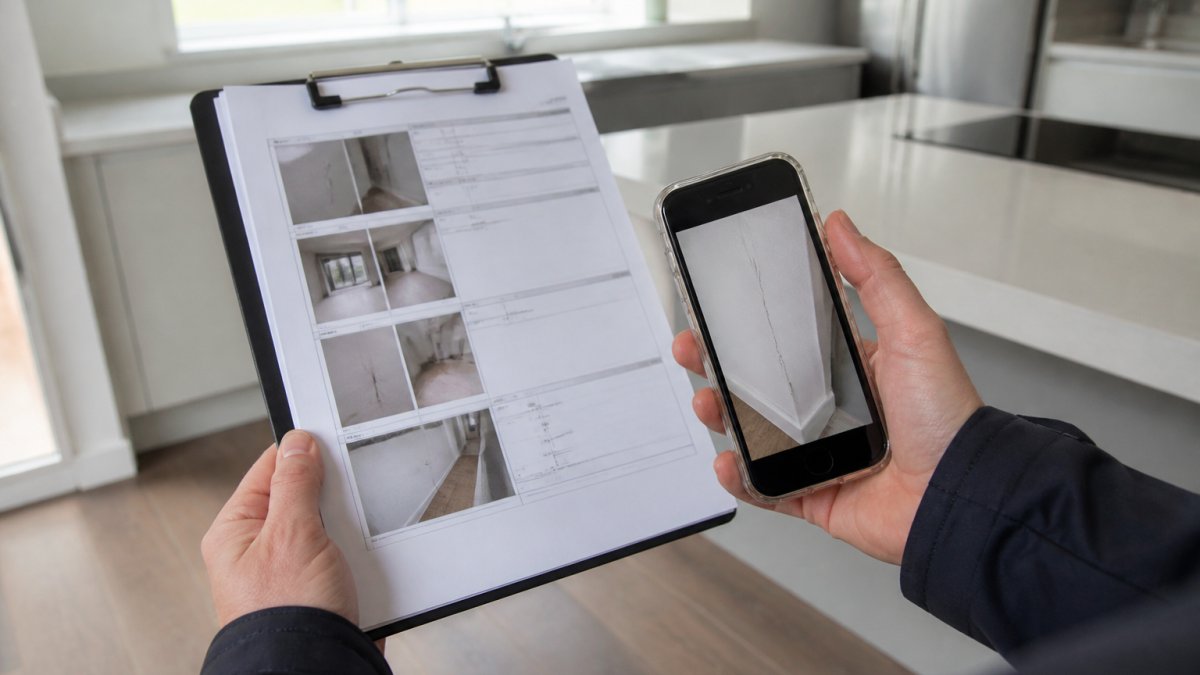
Strong snagging report evidence is dated, located and specific. A photo of a crack tells the builder almost nothing. A photo of the crack with a tape measure across it, a date stamp, and a note saying “rear bedroom, north wall, 4mm wide, first logged 12 May” gives them nowhere to hide.
Build the evidence file in this order:
- Photographs with scale and date. Include a tape measure or a coin for size reference.
- A written log. Note the date you first reported each item and who you spoke to.
- Your original snagging report, if you commissioned one, as the baseline.
- Any correspondence with the site manager or customer care team.
Keep everything in one folder, digital and backed up. If the dispute escalates, this file becomes your case.
Build your evidence file in this order so each item is dated, located and specific.
| Evidence item | What to include |
|---|---|
| Photographs with scale and date | Tape measure or coin for size reference |
| Written log | Date first reported and who you spoke to |
| Original snagging report | Baseline if you commissioned one |
| Correspondence | Emails or letters with site manager or customer care |
Step 3: Write a Snagging Dispute Letter Template That Gets Results
A good snagging dispute letter template does three jobs: it states the facts, it sets a deadline, and it creates a paper trail. Keep it short and unemotional.
Use this structure:
Subject: Formal snagging dispute, [property address], plot [number]
Dear [name],
I am writing to formally dispute items on the snagging report dated 2026. The following items are either missing, incorrectly dismissed, or not properly described:
- [Item, location, date first reported]
- [Item, location, date first reported]
- [Item, location, date first reported]
I have attached dated photographs and my original report as evidence. Please confirm in writing which items you accept and provide a repair schedule within 14 days.
If I do not receive a response, I will refer the matter to [relevant body] and seek independent advice.
Yours sincerely,
[Name, address, contact details]
Send it by email and by recorded post. Keep a copy. That single letter often moves things faster than any phone call.
What to Do When a Builder Rejected Your Snagging Report
When a builder rejects your snagging report, the first move is to ask them to justify the rejection in writing. A refusal to put it in writing usually means the rejection was never properly considered.
Then take these steps:
- Request the reasoning. Ask which standard or tolerance each rejected item fails to meet.
- Compare against the warranty. Check the NHBC standards and guidance on what counts as a defect versus normal settlement.
- Escalate internally first. Follow the developer’s formal complaints procedure before going external.
- Bring in an independent view. A second professional opinion carries more weight than your own.
A common mistake is arguing about everything at once. Group the strong items, the ones with clear evidence, and lead with those. Win the obvious ones first.
How Long to Fix Snags After Completion and When to Escalate
There is no single legal deadline for fixing snags after completion, so the answer depends on what your contract and warranty say. In practice, most developers aim to clear agreed snags within a set period after handover, often a few weeks for minor items and longer for anything needing a specialist trade.
Escalate when:
- The builder misses the repair date they gave you in writing
- Items are marked “complete” but are not fixed
- You get no response to a formal dispute letter within 14 days
- The same defect keeps returning
Your escalation route runs through the developer’s complaints process, then the warranty provider, and then the New Homes Ombudsman Service where the developer is registered with it. Keep every date and every reply.
Book an Independent Snagging Inspection Before You Challenge
The strongest position before you challenge anything is a report the builder cannot easily dismiss. That is where we come in.
At Quality Surveying Ltd, we work solely for homeowners, never developers. Our inspections are carried out by accredited RICS or RPSA professionals, using equipment such as thermal imaging cameras to catch defects the untrained eye misses. Our reports are fully aligned with NHQB requirements and issued digitally within 48 hours.
We identify cosmetic, mechanical, structural and finishing defects, and we explain them in plain English. That gives you a clear list, clear evidence, and a clear basis for your snagging dispute letter template.
Frequently Asked Questions
Can a builder reject a professional snagging report?
A builder can dispute findings in a snagging report, but they cannot simply dismiss a report from an accredited surveyor without reason. If your report was produced by an RICS or RPSA professional and includes dated photographs, measurements and clear descriptions, the builder is expected to respond point by point. A blanket rejection is not a valid response. Ask for their reasoning in writing and escalate to the warranty provider or NHQB if they refuse to engage.
How do I challenge a builder’s response to a snagging report?
Start by comparing their response against the original report line by line. For each snag they dispute, ask them to explain in writing why it does not fall within their obligations. Include your evidence with the challenge, and set a reasonable deadline for a reply. Keep everything in writing, send letters by recorded delivery or email with read receipts, and copy in the warranty provider if the builder does not respond within the agreed timeframe. A clear paper trail strengthens your position if the dispute escalates.
What evidence should I provide when disputing a snag?
Strong evidence for a snagging report includes dated photographs showing the defect alongside something for scale, written descriptions of when and where the issue appears, and any relevant correspondence with the builder. For structural or hidden defects, a thermal imaging report from an accredited surveyor carries more weight than a phone photo. Keep a timeline of events and copies of all emails and letters. This evidence package supports your snagging report and makes it harder for the builder to argue the defect is cosmetic or caused by you.
Can I escalate a snagging dispute through a new-build warranty provider?
Yes. Most new-build warranty providers, including those under the NHQB framework, have a formal complaints and dispute resolution process. You will typically need to show that you have already raised the issue with the builder and given them a reasonable chance to respond. Submit your snagging report, evidence and correspondence with the builder. The warranty provider can instruct an independent assessment and require the builder to carry out covered remedial work. Check your policy documents for the exact escalation steps and time limits.
Challenging a builder over snags is rarely pleasant, but it is far easier when you have an independent, accredited report behind you. Get a quote from Quality Surveying Ltd and protect the home you paid for, with an inspection by RICS or RPSA professionals, thermal imaging equipment, and a digital report within 48 hours.
