

Table of Contents
- Is Snagging Necessary for New Builds? What the Evidence Says
- What a New-Build Snagging List Should Cover
- When to Get a Snagging Survey: Timing That Protects You
- How Long Does a Snagging Inspection Take?
- New-Build Defects and Repairs: What Developers Must Fix
- DIY Snagging vs a Professional Inspection
- Book Your Independent Snagging Inspection
- Frequently Asked Questions
Last Updated: October 25, 2026
Is Snagging Necessary for New Builds? What the Evidence Says
Yes, snagging is necessary for new builds. A new home is rarely perfect on handover day, and small faults left unfixed can turn into expensive problems later. This guide from Quality Surveying Ltd explains what to check, when to book an inspection, and how to get defects put right.
The question of whether snagging is necessary for new builds comes up with almost every buyer we speak to. A common mistake is to trust the developer’s own quality checks and skip an independent look. In practice, the person who built the home is not the person best placed to find its faults.
New-build snagging is the process of inspecting a newly built or newly converted property for defects and unfinished work before or shortly after you move in. The goal is simple: get everything on a written list and have the developer fix it while the warranty still covers it.
So is snagging necessary for new builds in every single case? Not always. A well-run site with a strong finishing team may hand over a home with only a handful of minor issues. But you cannot know that without looking, and by the time problems show up, your recourse has shrunk.
Below, we’ll show you exactly what a proper inspection covers and how long the whole process takes.
What a New-Build Snagging List Should Cover
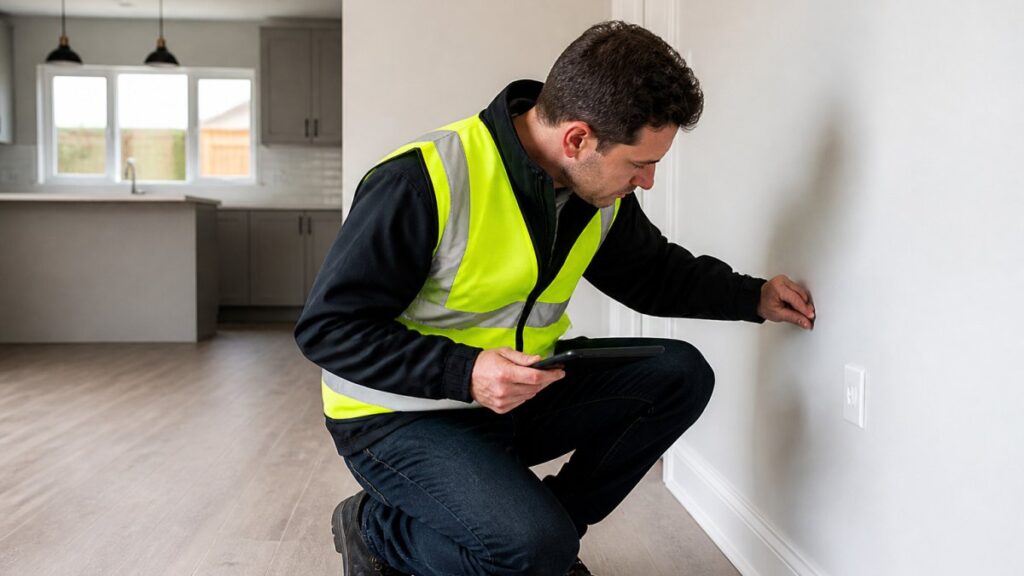
A new-build snagging list should cover every room, every service and the outside of the property. The list records each defect, its location and what needs doing. A good list is specific enough that a tradesperson can act on it without asking questions.
Cosmetic and Finishing Defects
These are the faults you can see. They are common and usually quick to fix, but only if they make it onto the list.
- Scuffs, chips and marks on walls, doors and skirting
- Uneven paintwork, drips and missed patches
- Gaps between skirting boards and floors
- Poorly fitted doors that stick or won’t latch
- Cracked or loose tiles in kitchens and bathrooms
- Squeaky floors and loose stair treads
- Damaged worktops and chipped units
Mechanical, Structural and Hidden Defects
Some of the most important problems are the ones you cannot see. This is where an untrained eye misses the most.
- Draughts and cold spots around windows and doors
- Damp patches and signs of water ingress
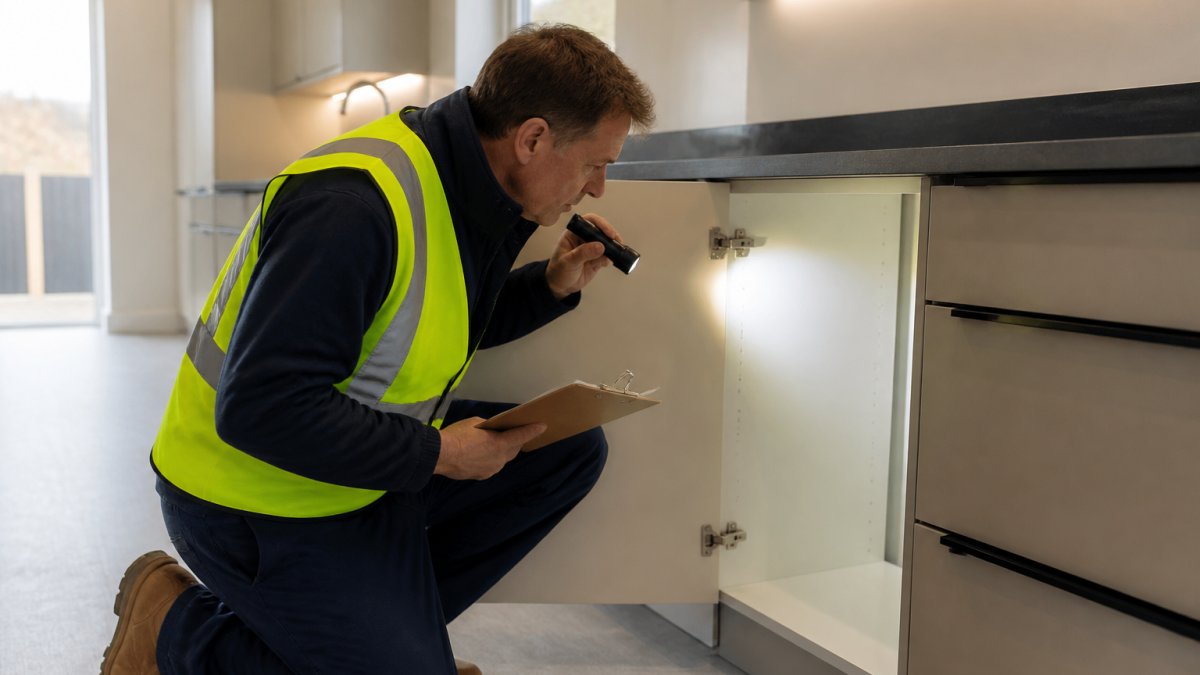
- Plumbing leaks under sinks and behind units
- Faulty sockets, switches and heating controls
- Poor drainage and guttering that doesn’t flow
- Cracks in brickwork or render
- Missing or inadequate insulation
A thermal imaging camera can reveal cold bridging and hidden damp that a visual check would never catch. That is one reason a professional inspection finds more than a walk-round ever will.
When to Get a Snagging Survey: Timing That Protects You
The best time to get a snagging survey is before you complete, or as soon as possible after handover. Early inspection gives you the strongest position to ask the developer to fix things. Once you have the keys, the clock starts on your warranty period.
There are two main windows:
- Before completion: You can often inspect once the property is watertight and near finished. Faults found now can be fixed before you move in.
- After handover: If you could not inspect early, book within the first few weeks. This is when most defects are still easy to prove and fix.
The NHQB guidance on new-build quality sets out how builders should handle defects and complaints. Knowing the process helps you hold the developer to it.
How Long Does a Snagging Inspection Take?
A snagging inspection usually takes two to four hours for a typical home, depending on its size and how many issues turn up. Larger properties and those with complex services take longer. The inspection itself is only part of the timeline.
Here is what to expect from start to finish:
| Stage | Typical Time | What Happens |
|---|---|---|
| Booking | Same week | You agree a date and share access details |
| On-site inspection | 2-4 hours | Surveyor checks every room, service and the exterior |
| Report writing | 24-48 hours | Findings compiled into a digital report |
| Report delivery | Within 48 hours | You receive a clear, itemised document |
| Developer response | Varies | Builder reviews the list and schedules repairs |
The whole process from booking to report is often just a few days. That speed matters when you are keen to move in.
New-Build Defects and Repairs: What Developers Must Fix
Developers must fix defects that fall within the terms of your warranty and the build contract. This usually covers faults caused by poor workmanship or materials. It does not cover damage you cause or normal wear and tear.
New-build defects and repairs are governed by your warranty provider and the consumer rights guidance from the Competition and Markets Authority. Under consumer law, goods and services must be of satisfactory quality. A home with defects that were not disclosed may fall short of that standard.
A common mistake is to report snags verbally. Always put them in writing, with photos and dates. A clear report from an independent surveyor carries more weight than a list scribbled on a notepad.
What Happens If the Developer Refuses to Act
If the developer refuses to act, you have options. Start by escalating through their formal complaints process. If that fails, you can raise the matter with your warranty provider, who has a dispute process. The NHBC complaints and resolution service explains how this works for covered defects.
Keep every email, photo and report. A well-documented case is far harder to dismiss.
DIY Snagging vs a Professional Inspection
DIY snagging can work for a confident buyer with time and a good checklist. A professional inspection is better when you want certainty, especially for hidden defects.
Here is the honest trade-off:
- DIY: Free, but you may miss hidden faults. You also have less weight when you challenge the developer.
- Professional: Costs more, but you get an accredited surveyor, proper equipment and a report the builder takes seriously.
At Quality Surveying Ltd, our RICS and RPSA-accredited surveyors work only for homeowners, never for developers. We use thermal imaging cameras to find problems the eye cannot see, and we align our reports with NHQB requirements. You get a digital report within 48 hours.
Watch out: a cheap inspection that skips the hidden checks can leave you paying for repairs later. The report is only as good as the surveyor behind it.
Book Your Independent Snagging Inspection
So, is snagging necessary for new builds? For most buyers, yes. A home is the biggest purchase you will ever make, and a few hours of inspection can save you months of arguments and repair bills.
The real challenge is finding defects before they become your problem. That is where independent, accredited expertise pays off. Quality Surveying Ltd gives you a clear, unbiased report you can hand straight to the developer, backed by RICS and RPSA accreditation and NHQB-aligned checks.
Get a quote from Quality Surveying Ltd and protect the home you paid for.
Frequently Asked Questions
Is snagging necessary for a new-build home?
It is not a legal requirement, but it is strongly advisable. New builds are rarely defect-free, and a professional snagging inspection identifies cosmetic, mechanical and structural issues before they become expensive. An independent report gives the developer a clear, itemised list to rectify and protects your investment. For most buyers, snagging new builds is a practical safeguard rather than an optional extra.
Can I snag a new-build home myself?
You can carry out a basic visual check, but a DIY approach misses hidden defects such as inadequate insulation, poor drainage falls or thermal bridging. A professional recourses equipment like thermal imaging cameras and has the trained eye to spot issues an untrained buyer would overlook. If budget is tight, a DIY list is better than nothing, but an accredited inspection is more thorough and carries more weight with developers.
What happens if I find defects after moving in?
You can still report them. Most developers offer a warranty period, often two years for snagging and ten years for structural defects via a warranty provider. Report new-build defects and repairs in writing as soon as you notice them, with photographs and dates. An independent snagging report created before completion or shortly after handover makes it harder for a developer to dispute later claims.
How long does a snagging inspection take?
A typical inspection takes two to four hours on site, depending on property size and complexity. The written report is usually issued within a few working days. Plan for the inspection to happen before your legal completion or within days of handover, so the developer can address issues before you move in or shortly after.
Buying a new build should not mean accepting a long list of niggling faults. Get an independent snagging inspection from Quality Surveying Ltd, with accredited surveyors, thermal imaging and a plain-English report within 48 hours. Get started with Quality Surveying Ltd and move in with confidence.
