

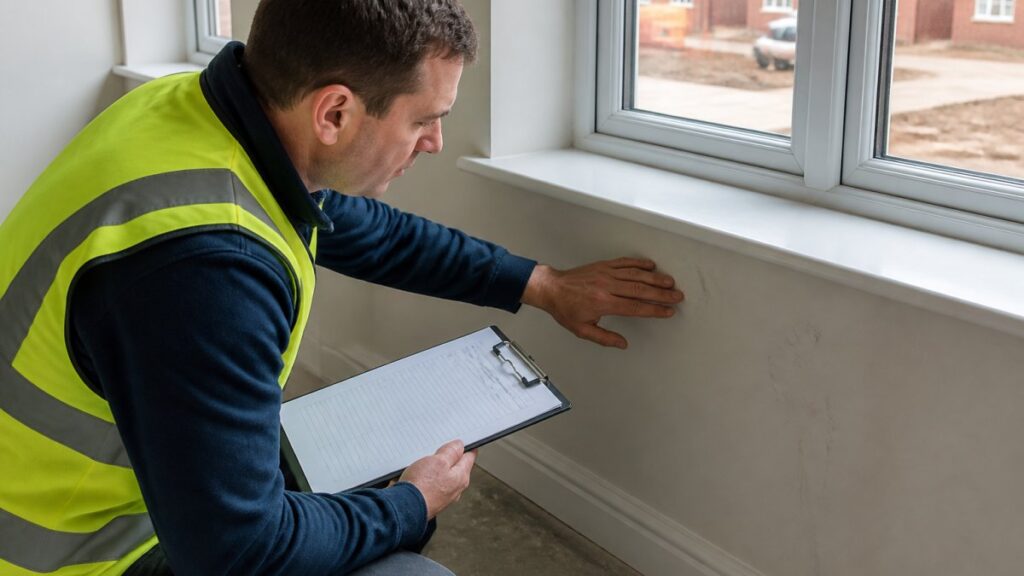
Last Updated: October 28, 2026
Quick Summary
A new build home defects checklist is a room-by-room list of the faults to look for in a newly finished property before you accept the keys. Work through each room from front door to back door and top floor to ground, noting everything, however small, because cosmetic faults matter. Report every defect in writing by email with photographs so you have a dated record.
- Check wet areas carefully, as a small silicone gap behind a bath can let water into the floor structure.
- Give the kitchen extra time: open every cupboard and drawer and run every appliance.
- Cracks wider than a hairline, especially at corners and above openings, may need a professional look.
- Photograph each defect with a wide shot, close-up and something for scale.
- Your developer is bound by the Consumer Code for Home Builders and the warranty provider’s standards.
Table of Contents
- Why a New Build Home Defects Checklist Matters Before You Move In
- Your Room-by-Room New Build Inspection Checklist
- New Build Kitchen Defects to Check Before Moving
- Structural and External Defects You Should Not Ignore
- How to Report New Build Defects to Your Developer
- What a Professional New Build Snagging Report Includes
- Book an Independent Snagging Inspection
- Frequently Asked Questions
Why a New Build Home Defects Checklist Matters Before You Move In
A new build home defects checklist is a room-by-room list of the faults to look for in a newly finished property before you accept the keys. That is the whole argument for checking properly, and early. A builder’s site team is still on site, still has the materials, and still has a reason to keep you happy. Once they move to the next development, your leverage drops.
Paint can cover rushed work, sealant can hide gaps, and a show-home standard is not the same as a handover standard.
Below, we break down exactly what to check, room by room, and how to get defects fixed.
Your Room-by-Room New Build Inspection Checklist
A new build inspection checklist works best when you follow the same route every time: front door to back door, top floor to ground. Work through each room and note everything, however small. Cosmetic faults matter.
Living Areas and Bedrooms
Start with the things you would notice on day one, then look closer. Common faults in living spaces include:
- Cracks above door frames and window corners
- Uneven skirting boards or gaps where they meet the floor
- Doors that stick, scrape or fail to latch
- Windows that don’t close flush or have damaged seals
- Sockets and switches that sit crooked or feel loose
- Paint runs, patches and missed edges
- Creaky or bouncy floorboards
- Scuffed or damaged flooring under protective film
Check the ceilings too. Water staining above a window can have different causes.
Bathrooms and Wet Areas
Wet areas are worth checking carefully. Look for:
- Poorly sealed baths, showers and splashbacks
- Tiles that sound hollow when tapped
- Grout gaps or cracked silicone
- Slow-draining showers and basins
- Toilets that rock or leak at the base
- Extractor fans that don’t run or are noisy
- Condensation or damp patches on walls
A small silicone gap behind a bath can let water into the floor structure before you notice.
New Build Kitchen Defects to Check Before Moving
Give the kitchen extra time. Open every cupboard and drawer. Run every appliance.
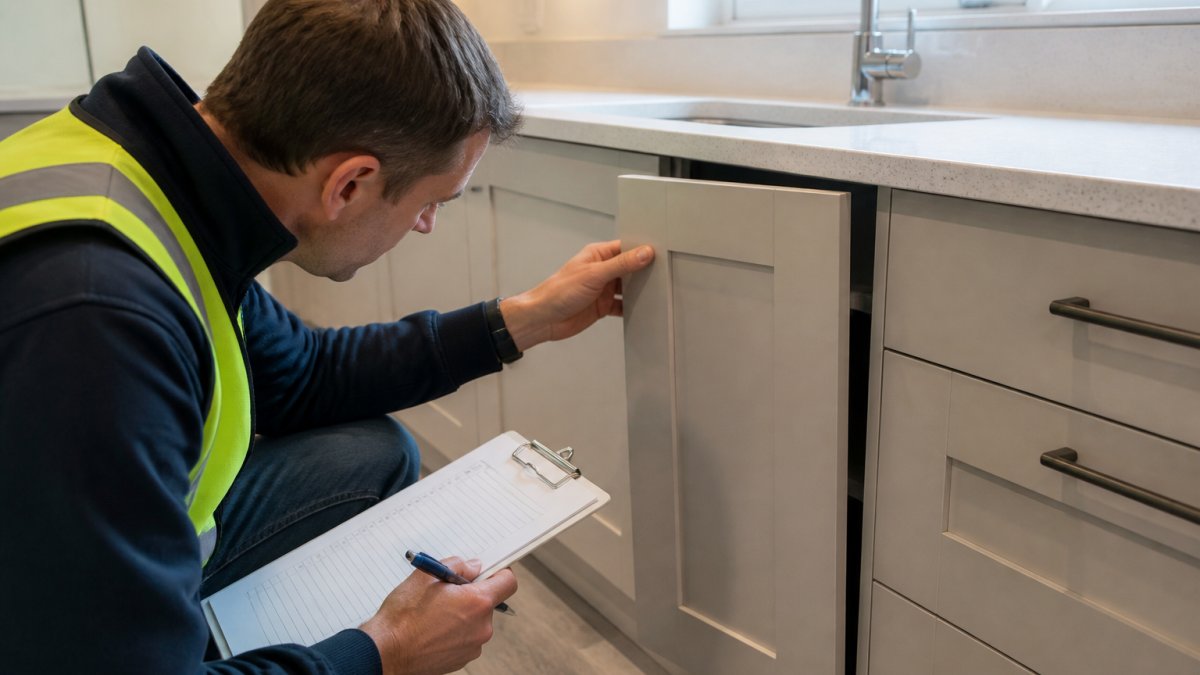
Seven faults to check for:
- Doors and drawers that don’t align or catch when closed
- Worktop joints that are visible, uneven or poorly sealed
- Hob and oven not level, or gas connections untested
- Extractor hood that doesn’t vent properly or is noisy
- Sink and tap leaks, or a tap that drips when off
- Appliance damage hidden behind protective film
- Missing or wrong units compared with your specification
Turn everything on. Run the taps, boil the kettle, test the extractor.
Structural and External Defects You Should Not Ignore
Some faults are cosmetic. Others may need further investigation. Structural defects affect how the building performs, not just how it looks.
Look for:
- Cracks wider than a hairline, especially at corners and above openings
- Bowing or uneven walls
- Damp patches, especially at ground level
- Roof tiles that are loose, missing or misaligned
- Blocked or poorly laid drainage and gulleys
- Gaps around external doors and windows
- Damaged brickwork, render or pointing
- Fence panels, paths and driveways left unfinished
A crack that runs diagonally from a window corner, or one that widens over weeks, may warrant a professional look.
How to Report New Build Defects to Your Developer
Reporting is where most buyers lose momentum. Do it in writing, do it once, and do it thoroughly. A phone call is not a record.
Follow this process:
- Photograph everything. Wide shot, close-up, and something for scale.
- Log each defect with its room, location and a short description.
- Submit in writing by email so you have a dated record.
- Keep it factual. Describe the fault, not your frustration.
- Set a reasonable deadline for a response.
- Track every reply and chase anything unanswered.
Your developer is bound by the Consumer Code for Home Builders and by the warranty provider’s standards, so a clear, documented list carries real weight. The Consumer Code for Home Builders sets out what you can expect during and after the sale.
If the builder disputes a finding, a written report from an independent professional can document it.
Reporting is where most buyers lose momentum, so follow these steps in order.
| Step | What to do |
|---|---|
| 1 | Photograph everything: wide shot, close-up and something for scale |
| 2 | Log each defect with its room, location and a short description |
| 3 | Submit in writing by email for a dated record |
| 4 | Keep it factual: describe the fault, not your frustration |
| 5 | Set a reasonable deadline for a response |
| 6 | Track every reply and chase anything unanswered |
What a Professional New Build Snagging Report Includes
A new build snagging report can record defects found during an inspection. It may include photographs and descriptions.
A proper report includes:
- A full room-by-room list of defects
- Photographs of each issue
- Clear explanations in plain English
- Severity ratings so you know what matters most
- Reference to the relevant standards
- A summary you can send straight to the developer
At Quality Surveying Ltd, our RICS and RPSA-accredited inspectors work solely for homeowners, never for developers. We use thermal imaging cameras to catch problems the eye misses, such as cold spots from missing insulation or hidden damp. Every report is fully aligned with NHQB requirements and issued digitally within 48 hours.
That independence is the point.
Book an Independent Snagging Inspection
A new build home defects checklist can help you check for defects, and a professional inspection can identify defects that may be missed by an untrained eye.
Our accredited inspectors identify cosmetic, mechanical, structural and finishing defects and provide an independent assessment. You get a digital report within 48 hours.
Get started with Quality Surveying Ltd and get a quote for your snagging inspection today.
Frequently Asked Questions
What defects should I look for in a new build home?
Work through each room methodically. Check walls and ceilings for cracks and uneven paint, floors for squeaks and gaps, doors and windows for poor alignment, and silicone seals around baths and showers. In the kitchen, test every cupboard hinge, drawer runner and appliance. Outside, look at brickwork, drainage and roof edges. A written new build home defects checklist can help you keep track of items, and you can photograph each issue with a date.
Can I report defects after moving into a new build?
Yes. Report anything you spot as soon as possible in writing, with photos and a clear description of the location. If the builder disputes a defect, an independent new build snagging report can document the issue.
Is a professional snagging inspection worth it?
A professional inspection can identify defects that may be missed by an untrained eye. Quality Surveying Ltd’s accredited professionals work solely for homeowners, not developers, and issue a digital report within 48 hours.
What should I do if the builder does not fix a defect?
Put your complaint in writing, keep a dated log of every call and visit, and give the developer a reasonable deadline to respond.
The earlier you inspect, the more leverage you hold. Book before completion if you can, and never accept a handover without a proper check.
