Last Updated: October 30, 2026
Quick Summary
There is no fixed snagging report cost, as pricing depends on the property and scope of inspection rather than a set rate. Factors such as property size, access, level of detail, timing, location, travel and re-inspection all move the figure up or down, so ask for a written quote based on your floor plan and completion date.
- Compare quotes by their inclusions side by side, not just the headline figure.
- A pre-completion inspection can be simpler because access is easier before you move in.
- Quality Surveying Ltd issues the digital report within 48 hours of the visit.
- A dated professional report gives you proof a warranty provider is most likely to accept.
- Arrange your inspection early rather than in the last week before completion.
Table of Contents
- What a New Build Snagging Report Cost Actually Covers
- Factors That Influence the Snagging Report Cost
- What Is Included in a Snagging Report?
- A Snagging Report Example: What the Document Looks Like
- How Long Does a Snagging Survey Take?
- Is a Snagging Survey Worth It? Weighing Cost Against Risk
- DIY Snagging vs a Professional Report: Legal and Warranty Implications
- Get a Quote for Your Independent Snagging Inspection
- Frequently Asked Questions
What a New Build Snagging Report Cost Actually Covers
Working out the new build snagging report cost starts with understanding what you are buying. A snagging report is an independent inspection of your new home that records defects, from crooked skirting to missing loft insulation, with photographs and clear descriptions so your developer can put them right.
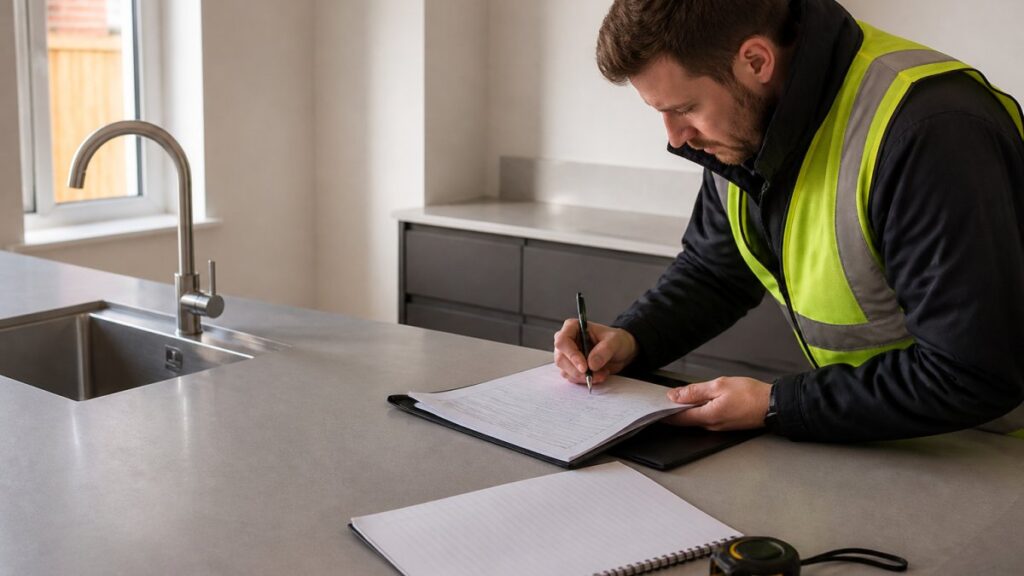
At Quality Surveying Ltd, we inspect properties before and after completion for buyers who want the standard they paid for. A professional inspection involves more than a walk around the house, typically including time on site, a photographic record, and a written schedule for the developer.
When comparing quotes, check what each one includes, such as the inspection itself, a room-by-room list, supporting evidence and a digital report, and whether extras like thermal imaging or a re-inspection are charged separately.
A common mistake is treating the cheapest quote as the best value without checking what it covers.
Factors That Influence the Snagging Report Cost
Pricing depends on the property and the scope of the inspection rather than a fixed rate. Larger properties generally take longer to inspect, and time on site is a major factor in any surveyor’s fee.
Here is what moves the figure up or down:
- Property size and layout: more rooms, more square footage, more inspection time. Ask for a written quote based on the property so you can compare like for like.
- Access and occupancy: an empty property is quicker to inspect than a furnished, lived-in home, because the surveyor is not moving around belongings or waiting for access to cupboards, lofts and utility spaces.
- Level of detail: additional techniques such as thermal imaging or drainage surveys add time and may affect cost, so confirm what is included before comparing quotes.
- Timing: booking a pre-completion inspection can be simpler, as access is easier before you move your belongings in and the developer’s site team is still on hand.
- Location and travel: travel time can form part of the cost, so the location of the property relative to the surveyor may affect the quote.
- Re-inspection: if you expect to need a follow-up visit to confirm remedial works, ask upfront whether it is included in the price.
Seasonal demand can also affect availability, as spring and summer are busy moving periods. Booking in quieter months may give you more choice of dates.
Asking for a written quote based on your floor plan and completion date can give you a clearer figure and show which extras are included.
When you compare quotes, put the inclusions side by side rather than the headline figure. A quote that includes everything you need can be better value than a cheaper headline price that charges for extras.
Pricing is not a fixed rate, so here are the factors that move the figure up or down.
| Factor | Effect on cost |
|---|---|
| Property size and layout | More rooms and square footage mean more inspection time |
| Access and occupancy | An empty property is quicker to inspect than a furnished home |
| Level of detail | Thermal imaging or drainage surveys add time and may affect cost |
| Timing | A pre-completion inspection can be simpler as access is easier |
| Location and travel | Travel time can form part of the cost |
| Re-inspection | Ask upfront whether a follow-up visit is included in the price |
| Seasonal demand | Spring and summer are busy, so quieter months give more choice |
What Is Included in a Snagging Report?
A professional snagging report records defects found during the inspection and organises them so the developer can act on each one. The document typically separates cosmetic defects from structural issues, because the two are handled very differently.
A thorough report usually contains a room-by-room snagging list, photographs of each issue, and a summary the developer can act on.
The difference between a good report and a poor one is clarity. If your builder cannot understand a defect from the description and photograph, it will not get fixed. A professional report spells out exactly what is wrong and where.
What most guides miss is that the report also protects you later. If a defect is documented before completion and the developer ignores it, you have a written record for any warranty claim.
A Snagging Report Example: What the Document Looks Like
Picture the document itself: a printed schedule on your kitchen worktop, each page pairing a photograph with a short written description. That is what you receive, and it is designed to be handed to a builder without further explanation.
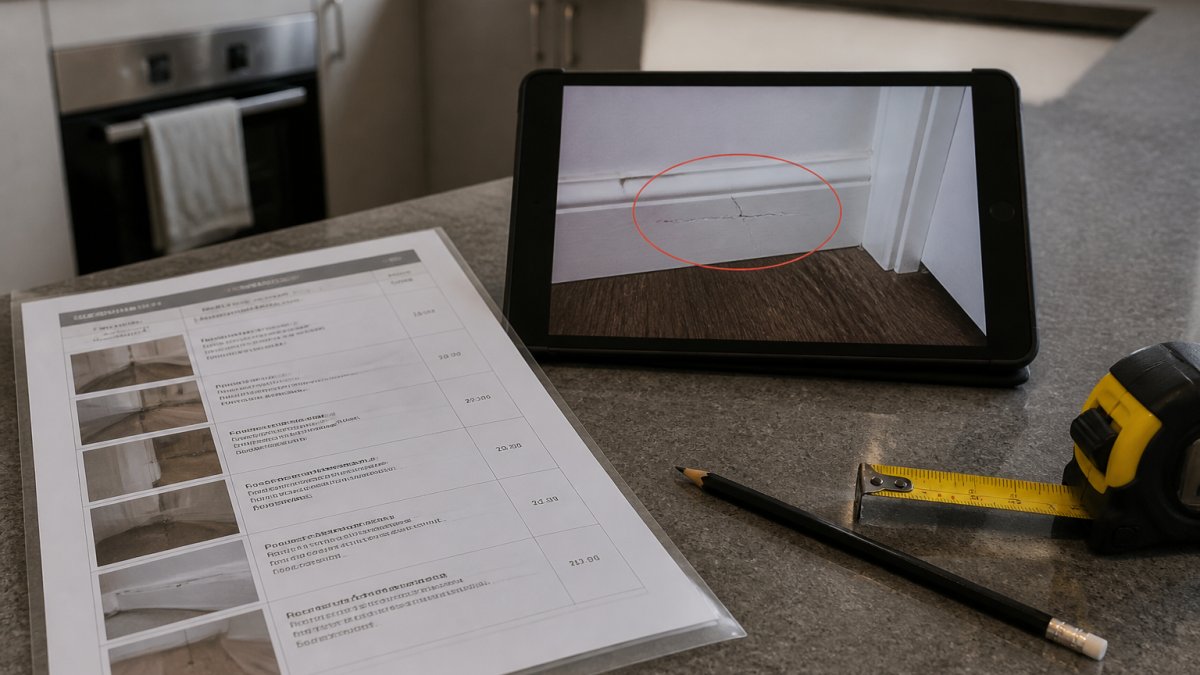
A typical entry in a snagging report reads something like this:
Item 14, Master bedroom: Hairline crack to ceiling above window, approximately 300mm long. Likely caused by settlement. Recommend raking out and filling, then monitoring for further movement. Photograph 14a attached.
Each entry names the room, describes the defect, suggests a likely cause, and references a photo. Multiply that across every room and you have a complete snagging list your developer can work through item by item.
You can see more about what a professional inspection involves on our snagging surveys page.
How Long Does a Snagging Survey Take?
A snagging survey takes time on site that depends on the size of the property. A small flat takes less time than a large detached house.
The inspection is only part of the timeline. After the visit, your surveyor compiles the photographs and writes the report. Quality Surveying Ltd issues the digital report within 48 hours, so you are not left waiting while your completion date creeps closer.
Timing your booking matters. A pre-completion inspection lets you catch defects before you legally complete. Our pre completion inspection page covers this timing.
If you are already living in the property, a post-completion inspection still works well, but expect to chase the developer more actively once you have the keys.
Is a Snagging Survey Worth It? Weighing Cost Against Risk
For most new-build buyers, yes. The cost of a snagging survey is small next to the price of the property, and the defects it uncovers often dwarf the fee in remedial value.
New builds commonly carry cosmetic defects such as uneven paintwork, poorly fitted doors, and cracked tiles.
Not every defect is serious enough for a developer to fix under warranty. A good report distinguishes between what must be remedied and what is simply cosmetic.
Where the report earns its fee: legal standing and warranty interaction.
Your developer’s obligations do not disappear because you did not inspect the property. Under consumer protection law, goods and workmanship are generally expected to be of satisfactory quality, and misrepresentation about a home’s condition can give buyers remedies.
That matters for warranty claims too. Structural warranties such as the NHBC Buildmark cover defined defects for defined periods, and the provider will generally expect a documented trail.
DIY vs professional: a fair comparison.
A DIY snagging checklist can be useful. For obvious cosmetic defects, chipped tiles, uneven paint, doors that catch, walking each room, photographing everything and sending a list to the site manager costs nothing but your time.
If you rely on a DIY list and a hidden defect later surfaces, you may struggle to prove it was there at completion. A dated professional report gives you that proof, and it is the document a warranty provider is most likely to accept.
So the value calculation is not simply “fee versus number of snags found”. It is fee versus the cost of remedying hidden defects yourself, plus the cost of losing a dispute you could have won with better evidence. For most buyers, that comparison comes out firmly in favour of a professional inspection.
If you want reassurance that an affordable, professional snagging company can deliver real value, our page on a professional snagging company affordably priced sets out what you should expect for your money.
DIY Snagging vs a Professional Report: Legal and Warranty Implications
You can snag your own new build. The question is whether a DIY snagging checklist carries the same weight when you need the developer to act.
A DIY list can work for obvious cosmetic defects, such as walking each room, noting cracks and poor finishes, and photographing them.
Where DIY falls short is in the defects you cannot see and the disputes you cannot win. An independent surveyor’s report carries authority because it comes from an accredited professional, backed by evidence and knowledge of building regulations and NHBC warranty standards.
Watch out: if you rely on a DIY list and a hidden defect later surfaces, you may struggle to prove it was there at completion. A dated professional report gives you that proof.
Developers have obligations to remedy defects, and warranty providers generally expect documented evidence. Our snagging services page sets out the inspections available if you want to compare against doing it yourself.
Get a Quote for Your Independent Snagging Inspection
The clearest way to know your new build snagging report cost is to ask for a quote based on your actual property. Generic price lists rarely reflect the size, layout, and timing of your home.
At Quality Surveying Ltd, we work solely for homeowners, never developers. Our inspections are carried out by accredited RICS or RPSA professionals using equipment such as thermal imaging cameras. Reports are issued digitally within 48 hours.
A common mistake is leaving the booking until the last week before completion. Arranging your inspection early gives you time to act on the findings.
Check whether we cover your area on our areas covered page, then request your quote.
Frequently Asked Questions
How much does a new build snagging report cost?
Pricing depends on the size of the property, how many defects are found, and when you book. A one-bedroom flat takes far less time to inspect than a four-bedroom detached house, and rates vary between surveyors. Rather than publish a fixed figure, ask for a written quote that states what the inspection includes, whether thermal imaging is used, and how quickly the report is issued. Quality Surveying Ltd works solely for homeowners, so the quote you receive reflects an independent inspection rather than one tied to the developer.
What is included in a professional snagging report?
A professional snagging report lists defects found during the inspection, with photographs and a description of each issue. A good report gives the developer a clear schedule to work from. Quality Surveying Ltd issues reports digitally within 48 hours of the visit, so you can send it to the site manager without delay.
Does the size of a new build affect the snagging survey price?
Yes. Property size is one of the drivers of the snagging report cost. A larger home has more rooms and more surface area to inspect, which means more time on site. Ask for a quote based on your floor plan before booking so there are no surprises.
Can I do my own snagging inspection instead of paying for a report?
You can walk your new build and note obvious cosmetic defects yourself. What a DIY checklist can miss is the non-visible work, which professional equipment such as thermal imaging may help identify. An independent surveyor also produces a report the developer’s site manager can act on, with photographic evidence. If you are weighing up whether a snagging survey is worth it, compare the cost of a report against the cost of remedial work you would otherwise fund yourself.
Buying a new build is a major commitment, and the defects a developer leaves behind can cost you time, money, and peace of mind. Quality Surveying Ltd provides independent, RICS-regulated snagging inspections backed by thermal imaging and reports delivered within 48 hours, so you can hold your builder to the standard you paid for. Get started with Quality Surveying Ltd and protect your new home before the keys change hands.
