Table of Contents
- Why Professional Snagging Services Matter for New-Build Homes
- What a Professional Snagging Inspection Covers
- Snagging Survey Cost: What Affects the Price
- When to Book a Snagging Survey: Timing for Best Results
- Snagging Survey Duration: How Long Does It Take?
- What a Snagging Report Example Reveals
- How to Choose Professional Snagging Services in the North West
- Frequently Asked Questions
Last Updated: 17 October 2026
Why Professional Snagging Services Matter for New-Build Homes
A new-build home is rarely the flawless finish buyers expect on completion day. Professional snagging services exist to catch the defects a developer’s own inspection misses, and in a market where new-build completions keep rising, that independent check has become essential. At Quality Surveying Ltd, we inspect newly built properties across the North West and work solely for the buyer, never the developer. That independence is the whole point: a snagging inspection is a documented, room-by-room audit of your property that gives you evidence to take back to the builder before your warranty clock runs down. Below, we explain what a snagging inspection covers, what drives the snagging survey cost, when to book a snagging survey, how long the process takes, and what a real snagging report example looks like.
The builder’s own quality check is not an independent check. A snagging survey is your evidence, not theirs.
What a Professional Snagging Inspection Covers
A professional snagging inspection covers every visible and non-visible defect in a new-build property, from cracked plaster to poorly fitted doors, and from drainage problems to gaps in insulation. The scope is deliberately broad because defects fall into four main groups:
- Cosmetic defects such as paint runs, scuffed skirting, and uneven tiling
- Mechanical and finishing defects such as sticking windows, misaligned doors, and loose fittings
- Structural defects such as cracked brickwork, uneven floors, and gaps around openings
- Hidden defects such as missing insulation, cold bridges, and damp that only shows up under thermal imaging
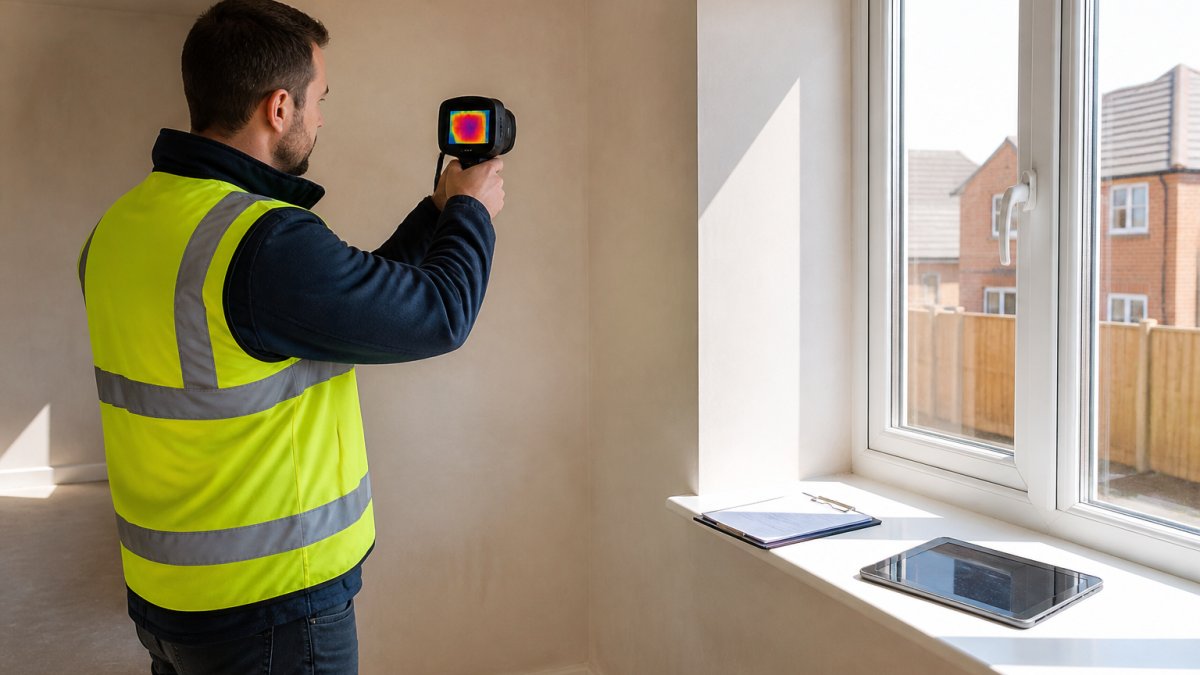
What most guides miss is the equipment. A trained eye catches the obvious snags, but thermal imaging cameras and moisture meters reveal problems that no visual walk-through will find. Our RICS and RPSA-accredited inspectors use that kit as standard, and the report is fully aligned with NHQB requirements so the developer cannot dismiss it as informal.
Snagging Survey Cost: What Affects the Price
Snagging survey cost depends on the size of the property, the number of rooms, the level of access, and how soon you need the report. There is no single fixed price, and any provider quoting one without asking about your property is guessing. Pricing typically reflects:
- Property size and type, since a larger home takes longer to inspect
- Access arrangements, including whether the property is occupied or still on site
- Report turnaround, with faster delivery often costing more
- Equipment used, such as thermal imaging and moisture testing
We do not publish fixed prices because every property is different. RICS guidance on choosing a surveyor is clear that buyers should always confirm what a quote includes before booking, so ask whether the fee covers the full inspection, the written report, and any follow-up on your behalf. Get a quote from Quality Surveying Ltd and you will get a clear figure based on your actual property, not a headline rate.
When to Book a Snagging Survey: Timing for Best Results
The best time to book a snagging survey is before you complete, ideally once the property is watertight and the developer confirms the handover date. Booking early protects your position, because the developer still has an incentive to fix issues before you take the keys. Two windows work best:
- Pre-completion, when the property is finished but still in the developer’s hands
- Shortly after moving in, before the warranty period tightens and snagging lists close
A common mistake is waiting until months after completion, when the developer argues the defects are wear and tear. The earlier you book, the stronger your case.
Leaving your snagging survey until the developer’s snagging window has closed means you lose the strongest lever you have: their obligation to fix defects before final handover.
Snagging Survey Duration: How Long Does It Take?
Snagging survey duration depends on the size of the property, but a typical inspection takes a few hours on site, with the written report following shortly after. A three-bedroom home is usually inspected in a single visit, while larger properties take longer. Our digital inspection report is issued within 48 hours of the visit, so you are not left waiting while your developer’s snagging deadline approaches.
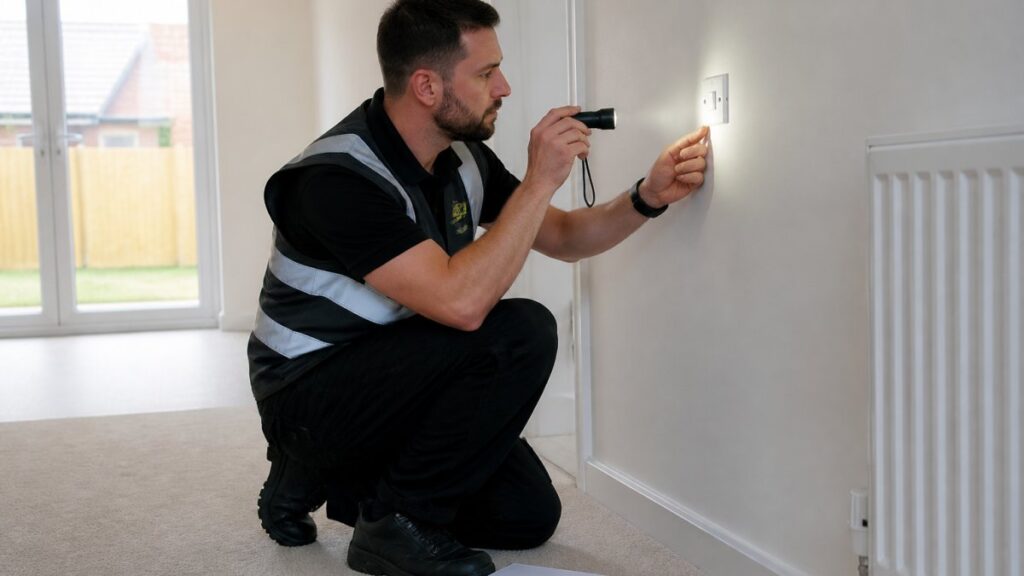
The inspection itself is thorough rather than rushed. Inspectors work room by room, testing doors, windows, plumbing, electrics, and finishes, and recording every defect with photographs and location notes. That detail is what makes the report stand up when the developer pushes back.
What a Snagging Report Example Reveals
A good snagging report example shows exactly what you should expect: a room-by-room list of defects, each with a photograph, a location, and a clear description in plain English. Reports are not meant to be technical documents you cannot understand. Ours are written so first-time buyers can read them without a surveyor at their elbow.
A typical report includes:
- An itemised defect list, grouped by room and severity
- Photographic evidence for every snag
- Plain-English explanations of what each defect means and why it matters
- A summary of priority issues the developer should fix first
The real difference between a useful report and a useless one comes down to clarity. If you cannot hand it to the developer and have them understand what needs fixing, it is not doing its job.
How to Choose Professional Snagging Services in the North West
Choosing professional snagging services in the North West comes down to independence, accreditation, and evidence. Ask three questions before you book: does the provider work solely for you, are they accredited, and will the report hold weight with the builder?
- Independence: Do they work solely for homeowners, not developers?
- Accreditation: Are they RICS or RPSA accredited?
- Equipment: Do they use thermal imaging and moisture meters?
- Turnaround: Is the report delivered in a stated timeframe?
- Plain English: Will they explain defects in language you understand?
- NHQB alignment: Is the report aligned with NHQB requirements?
What most reviews miss is that a cheaper provider who lacks accreditation can leave you with a report the developer simply ignores. At Quality Surveying Ltd, our inspectors are accredited RICS or RPSA professionals, we work solely for homeowners, and our reports are fully aligned with NHQB requirements. That combination is what gives your findings weight.
Ask any provider to show you a sample report before you book. If you cannot read it and understand every defect without help, keep looking.
Frequently Asked Questions
What does a professional snagging survey include?
A professional snagging survey covers cosmetic, mechanical, structural and finishing defects across the property. Inspectors check walls, floors, ceilings, windows, doors, plumbing, electrics and joinery. They use equipment like thermal imaging cameras to find non-visible issues such as insulation gaps or damp. The survey results in a detailed digital report with photographs and descriptions of each defect, which you can send to the developer for rectification. Accredited professionals align with NHQB requirements and work solely for the homeowner.
How much does a professional snagging survey cost?
Snagging survey cost varies based on property size, location and provider. Prices depend on the number of bedrooms, the inspection’s complexity and whether additional services like thermal imaging are included. Quality Surveying Ltd does not publish fixed prices because each quote reflects the specific property. Request a personalised quote from their website to get an accurate figure for your home. Avoid choosing solely on price; accreditation and report quality matter more.
When should I book a snagging inspection for a new-build home?
Book a snagging survey after the developer completes the property but before you move in or within the first few weeks of occupancy. Ideally, schedule it after the developer’s final clean and before your legal completion date, so defects can be fixed before you take ownership. If you have already moved in, you can still book an inspection, but report issues to the developer as soon as possible to meet warranty deadlines. Timing affects how quickly repairs are done.
How long does a snagging inspection take?
Snagging survey duration depends on property size and the number of defects found. The inspector then compiles a digital report, usually issued within 48 hours. Factors like access, weather and the property’s condition can affect timing. Book early in the day to allow ample time for a thorough inspection.
The challenge with a new-build is that the developer controls the schedule, the snagging window, and the paperwork, and you control almost none of it. An independent inspection shifts that balance back in your favour. Quality Surveying Ltd provides RICS and RPSA-accredited snagging inspections, thermal imaging to catch hidden defects, and a digital report issued within 48 hours, all working solely for you. Get a quote from Quality Surveying Ltd and protect the home you have paid for.